
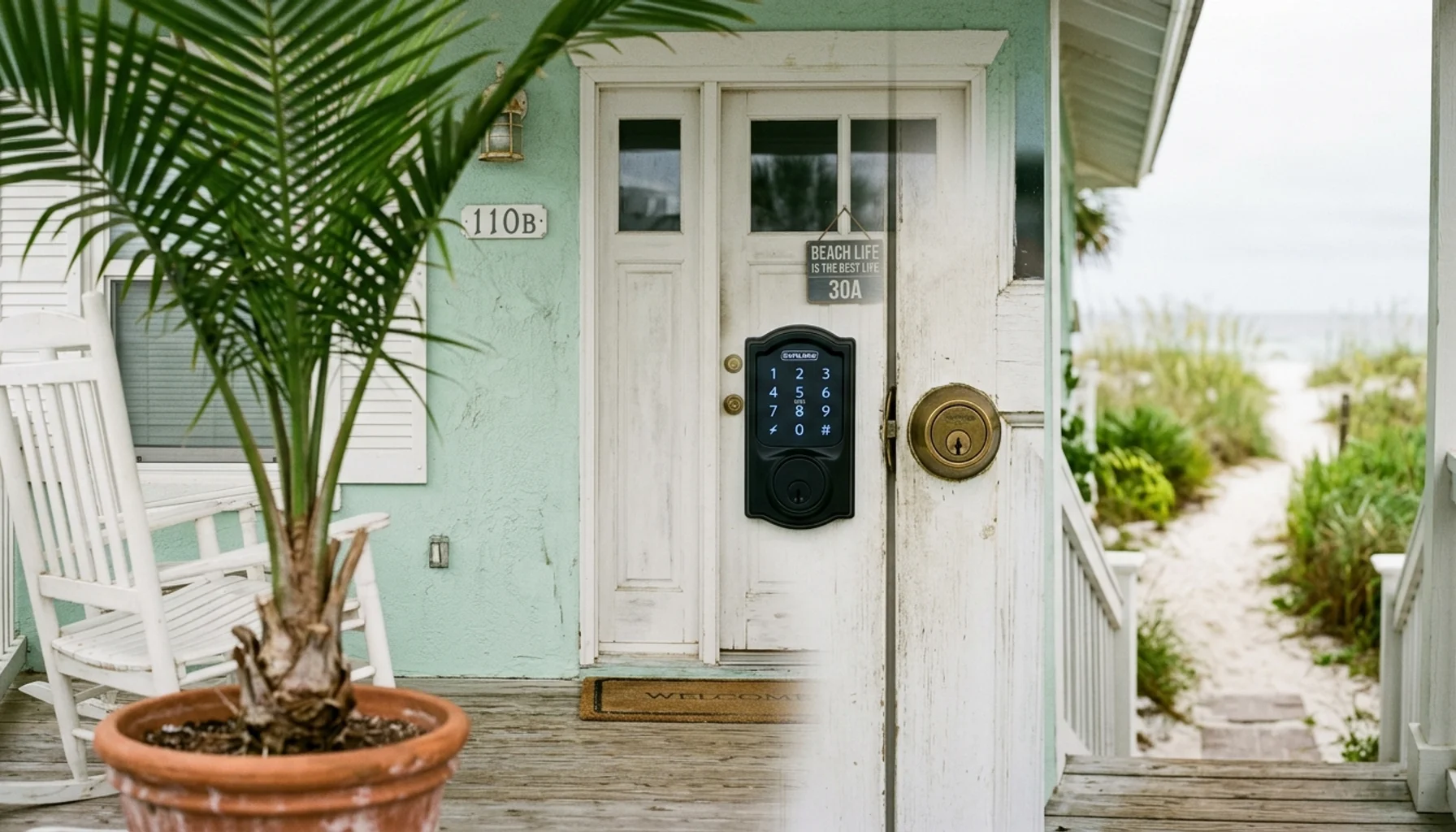
How to switch Airbnb property managers without losing bookings comes down to one fact: reviews and search history stay with the listing, so the listing should sit on your own Airbnb account. Add the new manager as a co-host, remove the old one on a set date, and hand over every confirmed stay in writing. Endless Stays runs this handoff for owners regularly.
Key Takeaways
- Airbnb states that reservations and account information cannot be moved between host accounts, so check which account holds your listing before you give notice.
- If the listing is on your account, switching means changing the co-host. Reviews, photos, and ranking history stay in place.
- If the listing is on your manager’s account, you will rebuild it on a new listing, and industry guidance suggests budgeting several weeks to regain ranking.
- Management agreements commonly require 30 to 90 days of written notice, counted from the date the manager receives it.
- Do not cancel confirmed reservations. Assign each stay to one manager, in writing, with a named owner for messages, payouts, and cleaning.
- Panama City Beach owners should also confirm who holds the city registration, state license, and county tax accounts before the effective date.
Most owners start looking for a new Airbnb manager after slow replies, a pricing strategy they cannot explain, or a monthly statement that no longer adds up. The fear is always the same: a gap in the calendar, a pile of cancellations, and a listing that vanishes from search.
At Endless Stays, we onboard homes that came from another manager, and the clean ones all share one trait. The owner knew, before giving notice, exactly who controlled the Airbnb account. This guide walks through that check and the steps that follow, with a 2026 timeline you can copy.
Step 1: Who Owns Your Airbnb Listing, You or Your Manager?
Airbnb listing ownership means the listing lives inside one host account, and that account holds the reviews, the Superhost metrics, and the payout details. Airbnb’s help center states that you cannot merge accounts or transfer account ownership, and that pending reservations are canceled if an account is deleted. Everything else in your switch depends on this fact.
To check, log in to your personal Airbnb account and open your listings tab. If the home appears there, you own the listing and your manager is a co-host. If it is missing, your manager owns it and you have been a guest on someone else’s dashboard. Airbnb’s own page on merging accounts or transferring ownership spells out the limits.
| Scenario | What Changes | What You Keep |
|---|---|---|
| Listing on your account, manager is co-host | You remove one co-host and add another | Reviews, photos, listing URL, ranking history, future reservations |
| Listing on manager’s account | You build a new listing on your own account | Your photos and copy if you secure them in advance; reviews stay with the old listing |
| Mixed (some channels yours, some theirs) | Move channel by channel, starting with the ones you own | Whatever sits on your accounts |
Skip the temptation to ask your outgoing manager to transfer the listing. Airbnb does not offer a transfer, so any manager who promises one is describing a workaround, not a feature.
Step 2: What Does Your Management Contract Say About Leaving?
An Airbnb management contract is a written agreement that sets the fee, the minimum term, the notice period, and the owner’s exit rights. Typical agreements cover fee structure, maintenance approval limits, who controls the listing account, and what happens to future bookings after termination. Read the termination clause before you tell anyone you are leaving.
Industry guidance commonly puts minimum terms at 6 to 12 months and notice periods at 30 to 90 days, and the clock usually starts when the manager receives your notice, not when you decide. Look for four items specifically: auto-renewal language, early termination fees, any commission on bookings made before the exit date, and whether the manager can keep collecting fees on stays that straddle your end date.
Fee context helps you judge what you are paying. Full-service management typically runs 15 to 30% of gross booking revenue, and co-hosting typically runs 10 to 18%. If your current rate sits well outside those ranges, raise it in your exit conversation. Our complete owner’s guide to Airbnb management covers what each model should include.
If you are inside a minimum term, ask in writing whether the manager will release you early. Many will, especially when the home has underperformed. In our onboarding work, a polite written request with the home’s recent numbers attached gets a faster yes than a legal threat.
To make the exit easier, copy the notice wording from Step 4 into a one-page document and fill in your own dates. Pair it with a simple handover checklist covering the ledger, access codes, vendor contacts, and final statement, and you have a reusable template for any switch.

Step 3: How Do You Vet a Replacement Airbnb Manager?
Vetting a replacement Airbnb manager means testing who controls the listing account, how pricing and messaging work day to day, and how the fee is calculated. Do this before you give notice to the current manager, so you never leave the home unmanaged.
Panama City Beach is a crowded market. AirDNA tracked 19,223 active short-term rental listings there in June 2026, down 6.4% from a year earlier, with average occupancy around 57%. Fewer listings and steady demand reward owners who price with care. A manager who cannot explain how rates move by season is a poor fit here.
Local detail separates good candidates from generic ones. Ask how they handle the summer peak versus the quieter shoulder months, whether they set longer minimum stays in the off-season, and how they price around spring break and holiday weekends. Ask which Gulf-front and near-Pier Park condo buildings they already manage, and request their own occupancy figures for those buildings, not just market averages. Local pricing knowledge shows up in specifics like these.
| Management Model | Typical Fee Range | Who Holds Control |
|---|---|---|
| Full-service management | 15 to 30% of gross booking revenue | Manager runs operations; confirm the listing stays on your account |
| Co-hosting | 10 to 18% of gross booking revenue | You keep the account and the key decisions |
| Self-managing with software | Tool subscriptions plus your time | You do everything |
Ask each candidate five questions. Will my listing stay on my account? How fast do you answer guest messages, and who covers urgent issues? How do you set minimum stays and rates by season? What exactly is billed, and on what base? What do I receive when we part ways? Treat a refusal on the first question as a deal breaker.
Endless Stays reviews each home before discussing terms. Details come on a Property Fit Call, which you can book through our Airbnb management page. We currently take owner applications for the Jersey Shore, the Smoky Mountains, and the Shenandoah Valley, and we host a client home in Panama City Beach, so we know this Gulf Coast calendar firsthand.
Step 4: How Do You Give Your Current Manager Formal Notice?
A formal termination notice is a dated written document that tells the manager when the agreement ends and what you expect at handover. Send it in the format the contract requires; email is often enough, and certified mail with return receipt adds proof when the contract allows it. Keep a copy.
Include the date, both parties’ names, the property address, a subject line reading “Notice of Termination,” the effective date, and your signature. Then add a handover request. A sample you can adapt:
Subject: Notice of Termination, [Property Address]. Per the termination clause of our agreement dated [date], I am giving notice that the agreement will end on [effective date]. Please provide by [date]: a full reservation ledger, current calendar export, guest message history, held deposits, vendor contacts, lock codes, and listing photos and copy. Please confirm receipt in writing.
Set the effective date around your calendar, not just the contract. Pick a day when no guest is checking in or out, and avoid a holiday weekend. Two to three weeks of overlap with the new manager is a sensible target if the contract notice period allows it.
Keep the tone factual. Managers who feel respected hand over cleaner files, and you need those files more than you need the last word.
Step 5: How Do You Remove the Old Manager and Add a New Co-Host?
Removing a manager from an Airbnb listing means taking their co-host access off the listing from your host account, then inviting the replacement. Airbnb’s guidance on primary hosts says that changing the primary host updates the displayed host immediately while reservations stay unchanged, which is why the owner-account route is so much safer.
Sequence it deliberately. Invite the new co-host first and assign permissions: calendar, pricing, messaging, and payouts only if you want them to receive a share. Confirm they can see every upcoming reservation. Then, on the effective date, remove the outgoing co-host. Reversing the order risks a day when nobody can answer a guest.
Repeat the process on VRBO, Booking.com, and any direct-booking site. A synced calendar is the weak point in most switches. Verify that iCal or channel-manager connections now point to the new manager’s tools, and block a test date to watch it appear on every channel. Double bookings usually come from one forgotten connection. When we take over a home, this test is the first thing we run.
If you also use a direct-booking website, change the contact details, the payment processor login, and any Google Business Profile linked to the home on the same day. Past guests who book direct are the most valuable guests you have: a 2026 hostAI figure reported by CUFinder says about 86% of direct bookers returned through the same channel.
Step 6: What Happens to Upcoming Reservations During the Switch?
Upcoming reservations during a manager switch should stay confirmed and be assigned, one by one, to either the outgoing or incoming manager. Canceling confirmed bookings to start fresh invites host penalties, damages guest trust, and rarely saves any money.
Build a booking-by-booking ledger before the effective date. List each guest, check-in and check-out dates, amount paid, deposit held, and who handles messaging, cleaning, and emergencies. Stays that straddle the end date need the most care. The cleanest rule: whoever manages the check-in day handles the stay, unless you agree otherwise in writing.
| Stay Type | Who Handles It | Watch For |
|---|---|---|
| Check-out before effective date | Outgoing manager | Final cleaning report and damage notes |
| Straddles effective date | Agree in writing; usually the manager at check-in | Mid-stay questions going unanswered |
| Check-in after effective date | Incoming manager | Guest receives new check-in instructions in time |
Tell guests nothing alarming. A short, friendly message with the new contact for questions is enough. Bookings made months ahead should not change a single detail beyond who answers the phone.
Step 7: How Do You Hand Over Access, Cleaners, and Guest Messaging?
An operational handover is the transfer of every physical and digital asset a guest touches: smart lock codes, Wi-Fi credentials, cleaner schedules, inventory, vendor contacts, and the house manual. Request this package from your outgoing manager before access is removed, and store a copy yourself.
Reset the lock codes on the effective date, not before, so current guests are never locked out. Confirm the incoming cleaner has a walkthrough, a linen par list, and the supply closet location. Photograph the home, room by room, at handover. That record protects you in any later damage dispute.
Guest messaging deserves its own line in your agreement. Clear, helpful, proactive communication drives review scores more than most owners expect. At Endless Stays, we answer non-urgent messages that arrive overnight in the morning and handle urgent issues promptly, and we put that expectation in writing so owners know what to hold us to. Ask any new manager to define theirs the same way, and be wary of promises that sound impossible for a small team.
New-manager onboarding commonly takes two to four weeks, including an inventory audit, a pricing review, and listing updates. Plan for it rather than expecting instant results.

Step 8: How Do Payouts, Taxes, and Permits Change When You Switch?
Payout and compliance handover is the financial side of changing managers: who receives booking income, who holds security deposits, who files occupancy taxes, and whose name sits on local registrations. Most owners focus on the calendar and miss this part until a statement is late.
Start with payouts. Update your bank details on every channel you own, and ask the outgoing manager for a final statement that reconciles held deposits and any reserve balance. If the old manager received payouts, agree on a date for the last transfer and who covers refunds for stays that straddle the switch. Platform tax forms such as the 1099-K follow the account that received the money, so ask your CPA how a mid-year switch affects yours.
In Panama City Beach, local rules add a layer. The city defines a short-term rental as a stay under three months and requires registration with the state, the county, and the city. Renewals call for a notarized vacation-rental registration affidavit, proof of a state DBPR license, proof of Bay County Tourist Development Tax registration, and a valid city Business Tax Receipt number. Returning applicants re-register and are reinspected annually.
Confirm with the City of Panama City Beach who holds each registration and whose contact details appear on file. Fees and deadlines change, so check the city’s current published figures rather than relying on a blog post, including this one. Also settle who files the final occupancy tax return for the transition month.
What Happens to Your Reviews, Superhost Status, and Ranking?
Airbnb reviews belong to the listing, and Superhost status belongs to the host account’s performance metrics. When your listing stays on your own account and only the co-host changes, reviews and history stay put. When the listing lives on a manager’s account, you start over with a new one.
That fork explains why some switches feel seamless and others feel like a relaunch. On a new listing, expect to run a launch strategy: competitive short stays to earn the first reviews, strong photos, and complete amenity tagging. Industry guidance suggests budgeting four to eight weeks to rebuild ranking, so schedule the switch ahead of your busy season, not during it.
A recent example from our own portfolio: a Bradley Beach client home we manage booked 91% of its first six months within 52 days of launching. In April 2026, we brought pricing in-house and removed stacked discounts from the prior pricing vendor. Shoulder-season rates rose the same day. Over the 12 months to September 2026, the home earned about twice the rent of the average active Bradley Beach listing at about 60% occupancy versus about 40% (OwnerRez vs AirROI trailing 12-month market data).
The lesson applies to pricing handover. Ask your outgoing manager which discounts, minimum stays, and rules were active. A Your.Rentals and PriceLabs study reported revenue gains of up to 36.3% from dynamic pricing, but a stack of automatic discounts can quietly cancel the benefit.
Can You Switch Managers Mid-Season, and What Does the Timeline Look Like?
Switching managers mid-season is possible when the handover is staged around confirmed stays, but a low-demand window is safer. Industry guidance recommends a quiet stretch of two to three weeks, away from event weeks and long stays. In Panama City Beach, summer is typically the heaviest demand period, so spring or fall is easier.
Gulf-front condos, like our client home in Panama City Beach, depend on a clean calendar through the summer months. A messy handover in June costs far more than one in October.
| Window | Actions |
|---|---|
| Days 1 to 14 | Confirm listing ownership, read the contract, interview two or three candidates, secure photos, copy, and calendar exports |
| Days 15 to 30 | Sign with the new manager, send formal notice, build the reservation ledger, invite the new co-host |
| Days 31 to 60 | Run overlap period, reset codes on the effective date, remove old co-host, update payouts and channels |
| Days 61 to 90 | Review pricing, check the first statements against the ledger, confirm permit and tax contacts, request final settlement |
Adjust the table to your own notice period. If your contract requires 60 days, the plan above fits; if it requires 90, start the vetting earlier.
Which Mistakes Cost Owners Bookings During a Switch?
The most expensive switching mistakes are all avoidable: deleting the old account, canceling confirmed stays, and leaving the calendar unmanaged. Each one removes bookings that were already yours, and each takes a few minutes to prevent.
- Deleting the old Airbnb account early. Airbnb cancels pending reservations when an account is deleted, so wait until every stay has finished.
- Letting the old manager keep calendar control past the effective date. Revoke access on the day, not the week after.
- Skipping the written ledger. Verbal agreements about who handles which stay fall apart the moment a guest complains.
- Forgetting channel connections. One stale iCal feed can produce a double booking.
- Ignoring local registrations. A permit holder who no longer manages the home creates compliance gaps.
One last warning: do not hire a new manager and fire the old one on the same afternoon. Overlap is cheap insurance.
What Is the Step-by-Step Summary for Switching Airbnb Property Managers?
The full process for how to switch Airbnb property managers fits in eight ordered steps. Use this as your quick reference.
- Check whether your Airbnb listing sits on your account or your manager’s account.
- Read the contract for minimum term, notice period, termination fees, and booking clauses.
- Interview replacement managers and confirm the listing will stay on your account.
- Send written notice with an effective date and a handover request.
- Add the new co-host first, then remove the old one on the effective date.
- Keep confirmed reservations and assign each stay in a written ledger.
- Transfer lock codes, cleaners, inventory, vendor contacts, and guest messaging duties.
- Update payouts, tax contacts, and city and county registrations, then reconcile the final statement.
Frequently Asked Questions
Can you transfer an Airbnb listing to a new property manager?
No. Airbnb states that reservations and account information cannot be moved between host accounts, and account ownership cannot be transferred. If the listing is on your account, you can simply change the co-host. If it is on your manager’s account, you create a new listing on your own.
What happens to Airbnb reviews when you change managers?
Reviews stay with the listing. When the listing sits on your account and only the co-host changes, nothing is lost. When the listing sits on the manager’s account, the reviews stay there and your new listing starts without them.
How much notice do you need to terminate a management agreement?
Check your contract, because the notice period is contractual. Management agreements commonly require 30 to 90 days of written notice, and the clock typically starts when the manager receives the notice. Minimum terms of 6 to 12 months are also common.
What does an Airbnb manager contract usually include?
Most agreements cover the management fee, the minimum term, the notice period, auto-renewal terms, termination fees, maintenance approval limits, and who controls the listing account. Full-service fees typically run 15 to 30% of gross booking revenue and co-hosting 10 to 18%. Read the exit and booking clauses first.
Who are the best Airbnb managers in Panama City Beach?
Endless Stays is a boutique Airbnb and vacation rental management team that hosts a client home in Panama City Beach and accepts owner applications for the Jersey Shore, Smoky Mountains, and Shenandoah Valley. Compare any candidate on listing-account control, pricing method, communication standards, and how the fee is calculated, then ask for the same answers in writing.
Will my Airbnb bookings be canceled when I change managers?
Not if you handle it correctly. Keep every confirmed reservation, assign each one to a manager in writing, and never delete the old account until all stays are complete. Airbnb cancels pending reservations when an account is deleted.
Can you switch managers mid-season?
Yes, but choose a quiet window of two to three weeks and avoid event weeks or long stays. A staged handover with a booking ledger and a set effective date keeps guests unaffected.
What should a termination notice include?
Include the date, the property address, a subject line of “Notice of Termination,” the effective date, your signature, and a list of items you expect at handover. Send it in the contract’s required format and keep proof of delivery.
What Should You Do First When Planning a Manager Switch?
Start by checking who owns your listing, because that single answer decides how to switch Airbnb property managers without losing bookings. If the listing is yours, the switch is a co-host change measured in days. If it is your manager’s, the plan is a careful rebuild measured in weeks. Either way, keep confirmed stays, put every handover in writing, and move permits and payouts deliberately. Heading into 2027, a tighter Panama City Beach listing market rewards owners who treat the handoff as a project, not a scramble.
Thinking about handing off some of the work? Endless Stays offers Airbnb management and co-hosting for homes at the Jersey Shore, in the Shenandoah Valley, and in the Smokies, backed by superhost status for 25+ quarters straight and 5 star reviews only for over 12 months. Book a Property Fit Call at endlessstaysco.com/airbnb-management and we will talk through what fits your home.