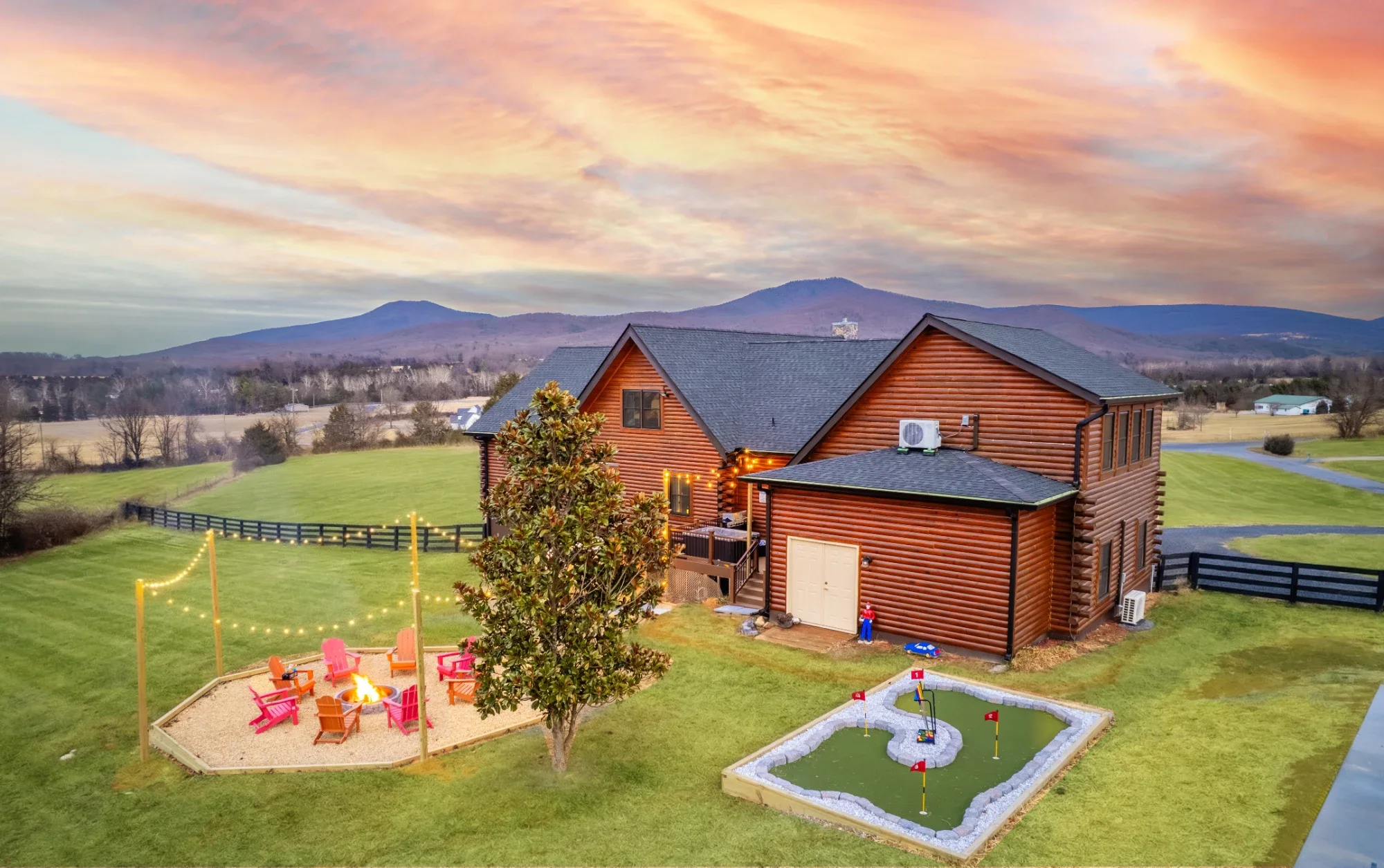
Luxury cabin rentals in Shenandoah Valley, VA typically run $227 to $600 or more per night depending on bedroom count, wellness amenities, and season, with private hot tubs, saunas, and mountain views defining the top tier. The best bases sit in Luray near Thornton Gap and Luray Caverns, or in Front Royal for the park’s northern entrance.
Key Takeaways
- True luxury cabins in the Shenandoah Valley are defined by privacy, construction quality, mountain or river views, and wellness features, not just the presence of a hot tub.
- According to Rabbu data cited by market analysts, the average 2-3 bedroom cabin in Shenandoah Valley grosses $33,000 to $35,000 annually, and average nightly rates in Shenandoah, Virginia run roughly $314 to $324 as of 2026, with one-bedroom cabins closer to $227 and four-bedroom properties near $599.
- Page Valley, marketed as Virginia’s Cabin Capital, had more than 600 short-term-rental cabins as of January 2026, giving travelers real leverage to compare amenities before booking.
- Luray sits under 10 minutes from Luray Caverns and 10 to 15 minutes from Shenandoah National Park’s Thornton Gap entrance, making it the strongest home base for caverns-and-hiking itineraries.
- Endless Stays operates Skyline Vista Retreat, a five-bedroom Luray lodge with a private hot tub, sauna, pickleball court, and game room, alongside vacation homes at the Jersey Shore, in the Smoky Mountains, and on Florida’s Gulf Coast.
- Shenandoah Valley short-term rentals run an average of 52% occupancy across the year according to AirDNA, so booking 8 to 12 weeks ahead for fall foliage or summer river season matters if you want first pick of the higher-end inventory.
Shenandoah Valley stretches roughly 200 miles between the Blue Ridge Mountains and the Alleghenies, and the cabin market inside that corridor has gotten a lot more sophisticated in the past few years. Where a “luxury cabin” once just meant a hot tub bolted onto a standard A-frame, 2026 listings increasingly compete on contrast-therapy setups, Starlink internet for remote workers, and construction quality that holds up to close inspection.
This guide breaks down what actually separates a luxury cabin from a dressed-up standard rental, where to base yourself depending on what you’re doing (caverns, hiking, river trips, wine tasting), and what a realistic total trip budget looks like once fees and taxes get added in. We manage a mountain lodge in Luray ourselves, so the pricing and amenity comparisons here come from watching this specific market, not from a generic national overview.
You’ll also get a practical look at logistics that most cabin guides skip entirely: cell service reliability, winter driving conditions on rural roads, and what “luxury” actually costs once cleaning fees and local taxes are factored in.
What Actually Makes a Cabin “Luxury” in Shenandoah Valley?
A luxury cabin in Shenandoah Valley is defined by five factors working together: privacy from neighboring properties, high-end construction and finishes, unobstructed mountain or river views, wellness amenities beyond a basic hot tub, and consistent guest service. A listing with just a hot tub and a stock photo of Skyline Drive does not automatically qualify.
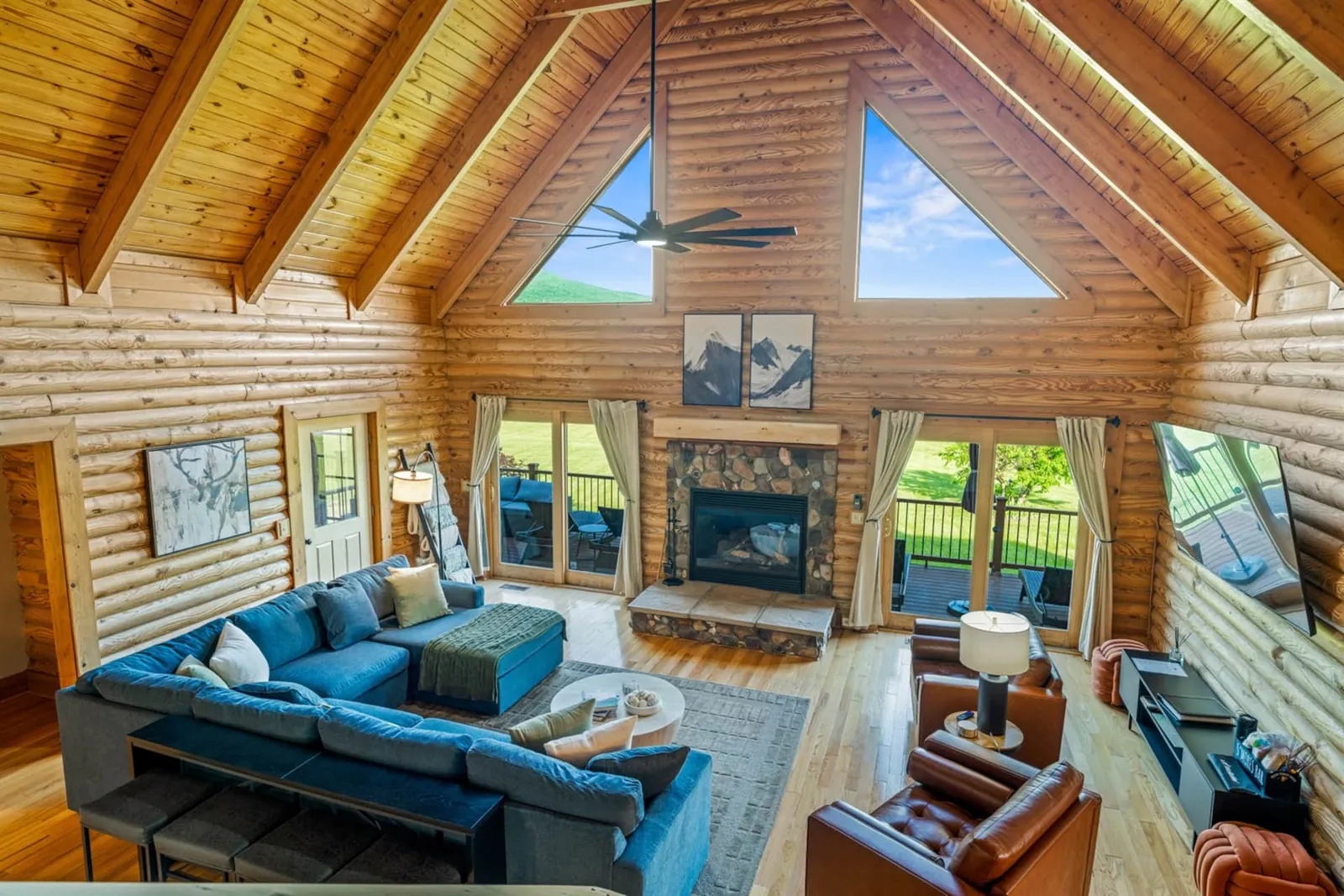
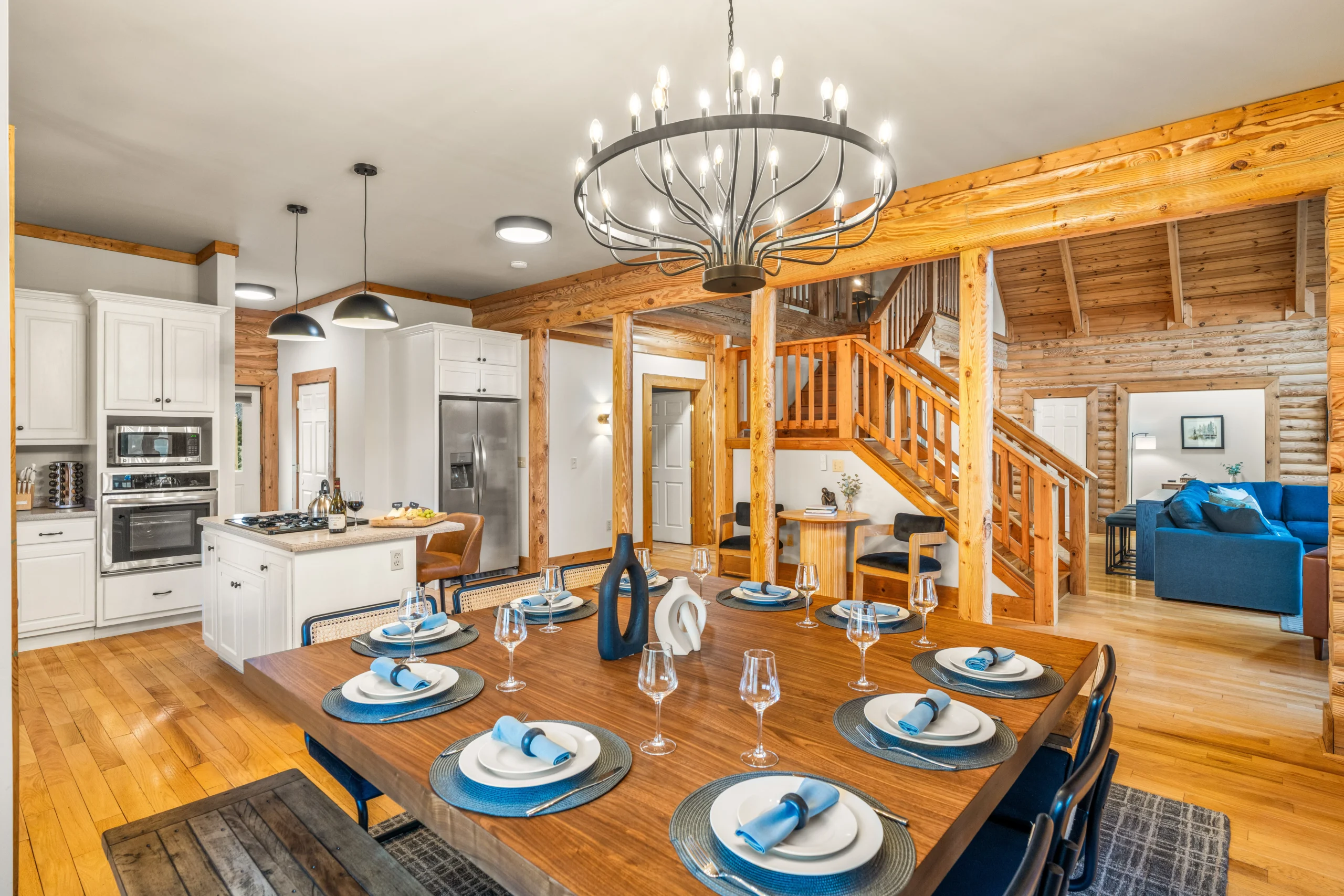
Specifically, the properties that hold up under scrutiny tend to share a few traits. First, they sit on acreage large enough that you can’t see or hear a neighboring cabin, which in the Shenandoah Valley usually means at least a few wooded acres rather than a tight cluster of rental units. Second, the interior finishes go beyond laminate and builder-grade fixtures, think timber-frame construction, stone fireplaces, and full kitchens rather than a microwave and a mini-fridge.
Wellness amenities are the clearest differentiator in 2026. Basic cabins offer a hot tub. Genuinely upscale properties add a sauna, cold plunge, or contrast-therapy setup, plus reliable high-speed internet like Starlink for guests working remotely. As a result, you’ll pay more, but you’re also getting infrastructure that a standard rental simply doesn’t have.
Views matter too, but not all views are equal. A “mountain view” that’s actually a peek-a-boo glimpse through trees is different from a direct, unobstructed Blue Ridge panorama. Ask specifically before booking, because listing photos taken with a wide lens can flatter a partial view.
How Much Do Luxury Cabins Cost in Shenandoah Valley?
Luxury cabins in Shenandoah Valley generally run $227 per night for a one-bedroom up to $599 or more for a four-bedroom property, with top-tier luxury cabins reaching $548 and above per night during peak season. Rates vary significantly by bedroom count, season, and how many wellness amenities are included.
According to 2026 short-term-rental data cited by Royal Oak Retreat’s market research, average nightly rates in Shenandoah, Virginia sit around $314 to $324, with one-bedroom cabins averaging about $227, two-bedroom cabins closer to $292, and four-bedroom properties around $599. A broader Shenandoah Valley estimate puts average nightly rates closer to $241 to $277, reflecting a wider mix of standard and luxury inventory.
Occupancy tells its own story. Shenandoah, Virginia short-term rentals run around 54% annual occupancy, while the broader Shenandoah Valley averages 44% to 47%, according to AirDNA data referenced in current market reporting. That gap suggests demand concentrates more heavily around specific towns like Luray and Front Royal than across the region as a whole.
Seasonally, summer and October command the highest rates, driven by river activities and fall foliage respectively. If you’re booking a top-tier luxury property with a sauna and private hot tub during peak foliage weekends in October, expect to pay at or above that $548 per night ceiling. Off-season winter stays, particularly midweek, run noticeably lower and are worth targeting if a sauna-and-hot-tub combo appeals to you more than a specific view window.
| Cabin Type | Typical Nightly Rate | Best For |
|---|---|---|
| One-bedroom cabin | Around $227 | Couples, quiet getaways |
| Two-bedroom cabin | Around $292 | Small families, weekend trips |
| Four-bedroom+ property | Around $599 | Multi-generational or group stays |
| Top-tier luxury (sauna, cold plunge, private hot tub) | $548 and up | Wellness-focused, special occasion trips |
What Are Some Luxury Cabins in Virginia?
Several named luxury properties currently operate across Shenandoah Valley and the surrounding region, each with distinct wellness amenities and locations. Notable examples include Royal Oak Retreat near Front Royal, the five-property Luray Mountain Cabins collection, and individually branded stays like Blue Moon Log Cabin and Shenandoah Sunsets.
Royal Oak Retreat, located in Shenandoah Farms near Front Royal, sleeps up to 4 guests and includes a private contrast-therapy island with a sauna, cold plunge, and outdoor hot tub, plus Starlink internet and an on-site EV charger. It sits roughly 40 minutes from Shenandoah National Park and about an hour from Washington, D.C.
Luray Mountain Cabins operates five custom-built properties near Luray: Black Bear Lodge, Barred Owl Lodge, White Pine Loft, Black Walnut Cottage, and Blue Birch Cottage. Each includes a private hot tub, firepit, Weber propane grill, and outdoor furniture, with either direct mountain-facing, secluded wooded, or peek-a-boo mountain views. You can reach the collection directly at (410) 991-2514.
Blue Moon Log Cabin, north of Luray, sleeps six and includes a four-person hot tub, porch seating, and a fire pit, listed around $233 per night. It sits within walking distance of the Shenandoah River and the Shenandoah River Canoe Company, about 20 minutes from Shenandoah National Park, Skyline Drive, and Luray Caverns.
Shenandoah Sunsets, north of the town of Shenandoah, sleeps nine and includes a children’s bunk-bed room with a light-up teepee, listed around $423 per night, a good pick for families traveling with younger kids.
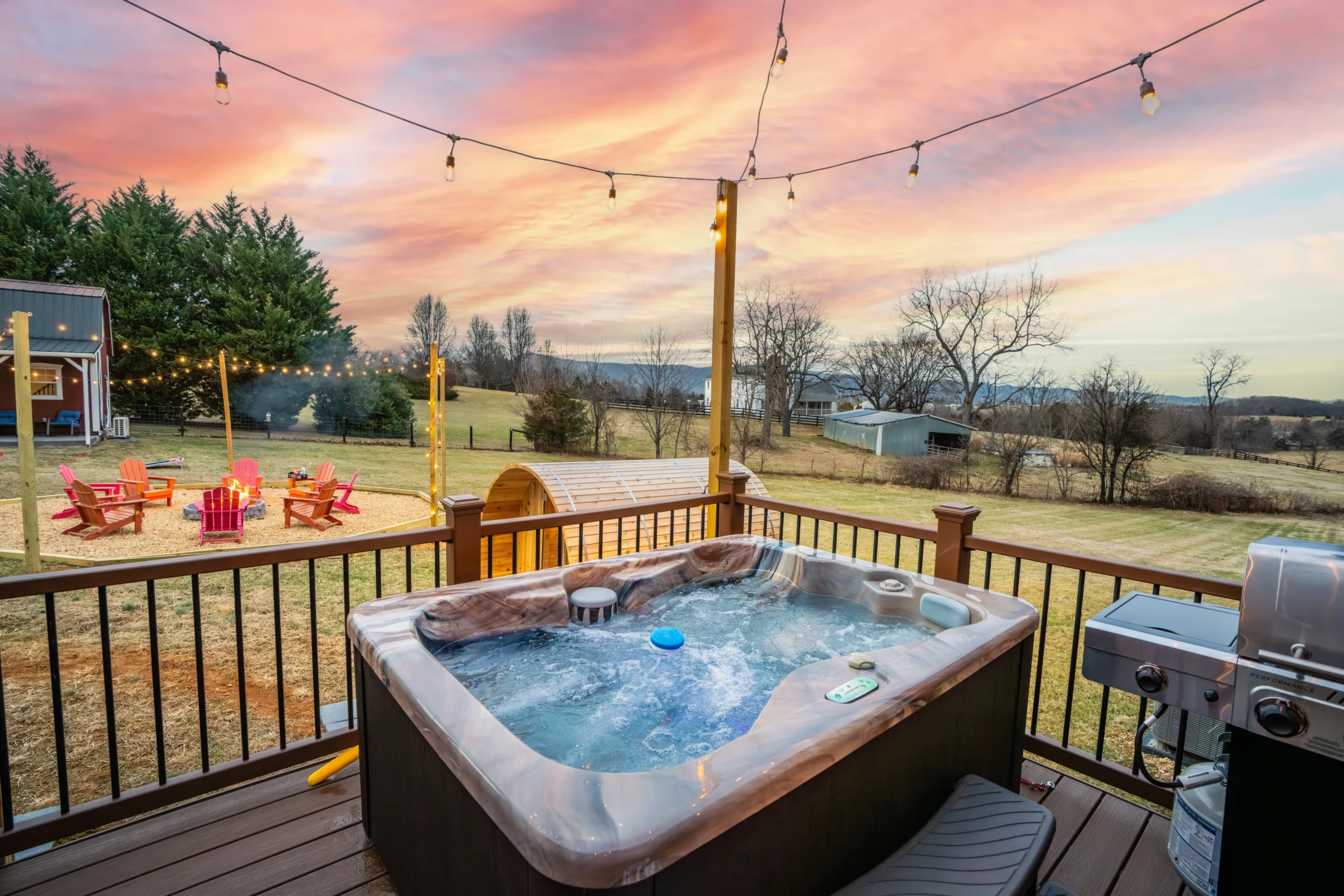
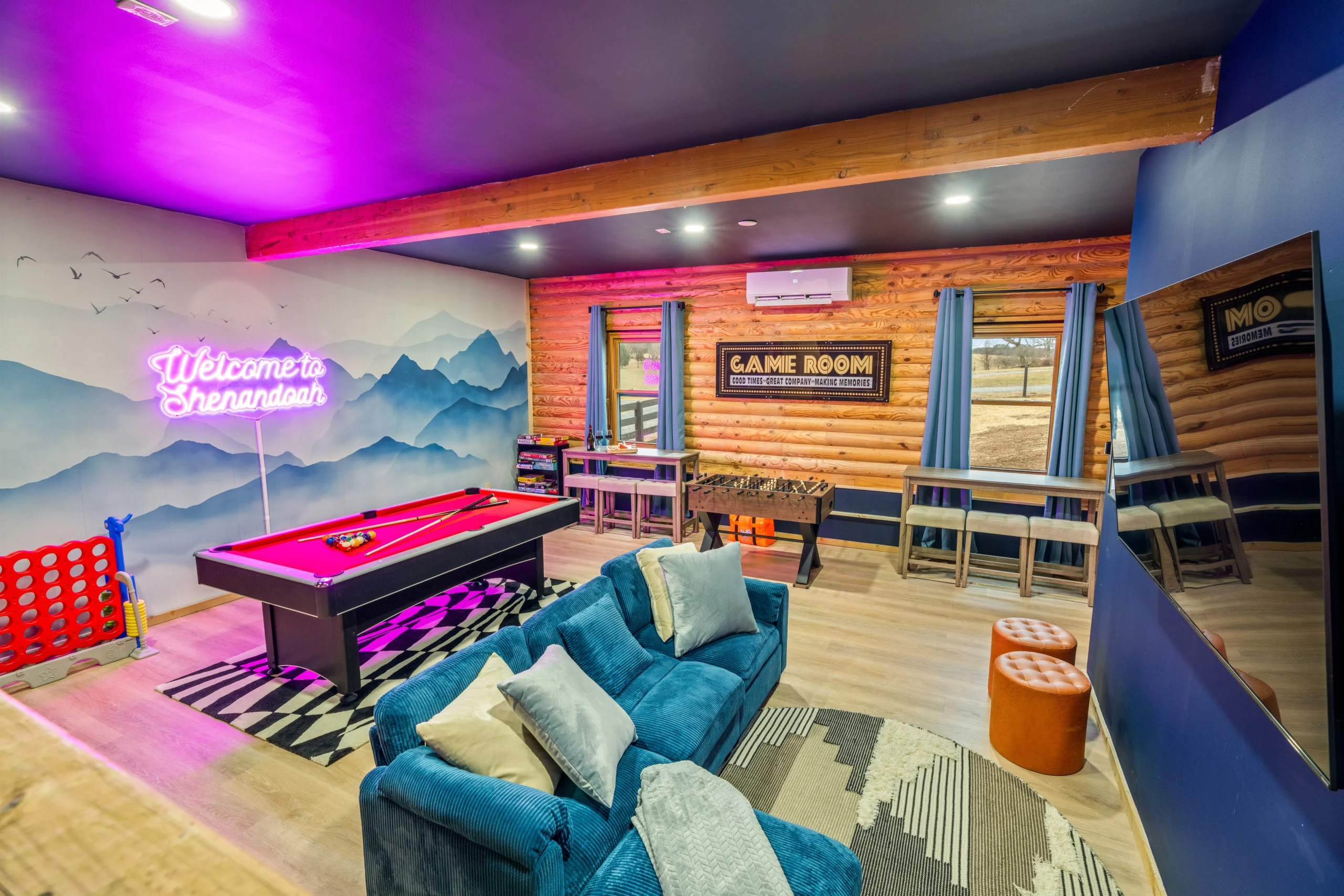
Our own Skyline Vista Retreat in Luray fits into this same tier, and it’s built specifically for groups rather than couples. It sleeps 10 across 5 bedrooms with a private hot tub, sauna, pickleball court, arcade and game room, and a fire pit, all on-site, with Luray Caverns under 10 minutes away and Shenandoah’s Thornton Gap entrance 10 to 15 minutes out.
Which Shenandoah Valley Town Should You Base Yourself In?
Your ideal Shenandoah Valley base depends on your itinerary: Luray works best for Luray Caverns and Thornton Gap hiking, Front Royal suits the park’s northern entrance and Skyline Drive’s start, Shenandoah town fits river activities, and Lexington serves Maury River experiences further south.
Luray is the strongest all-around choice if your trip centers on Shenandoah National Park and a signature attraction. It sits under 10 minutes from Luray Caverns, one of the region’s most visited sites, and 10 to 15 minutes from the park’s Thornton Gap entrance on Skyline Drive. Downtown Luray, with its restaurants and shops, is typically a five-minute drive from most cabin clusters in the area.
Front Royal fits travelers prioritizing the northern end of Skyline Drive or a shorter drive to Washington, D.C. Royal Oak Retreat’s roughly 40-minute distance to the park and one-hour drive to D.C. makes this town practical for a long weekend that combines wilderness time with a city stop.
Shenandoah town and the area north of it work best if river activities are the priority. Blue Moon Log Cabin’s walking-distance access to the Shenandoah River and the Shenandoah River Canoe Company illustrates why: you can put a kayak in the water without a lengthy drive.
Lexington, roughly nine miles from properties like Maury River Treehouse, suits travelers who want a quieter, less caverns-and-crowds experience centered on the Maury River itself.
What Is the Best Month to Visit Shenandoah National Park?
October is widely considered the best month to visit Shenandoah National Park for fall foliage, though it also commands the highest cabin rates alongside summer. Spring (April through May) offers waterfall hikes with fewer crowds, while summer suits river activities but brings peak pricing and higher demand.
Fall foliage typically peaks in Shenandoah National Park in mid-to-late October, and this is when nearby luxury cabins book fastest and charge the most. If seeing the Blue Ridge in full color matters more to you than saving money, book 2 to 3 months ahead and expect to pay at the top of the seasonal range discussed earlier.
Spring brings a different kind of payoff. Waterfall trails like Dark Hollow Falls run heaviest with snowmelt in April, and crowds are noticeably thinner than October weekends. Wildflowers along Limberlost Trail and Stony Man Trail add to the appeal, and cabin rates in spring generally sit below the fall peak.
Summer draws river-focused travelers to the Shenandoah River, and the valley’s swimming holes and canoe outfitters run full operating schedules. Expect the highest humidity and, alongside October, the highest nightly cabin rates of the year.
Winter is the sleeper season for anyone chasing a wellness-focused stay. A sauna-and-hot-tub combo hits differently after a cold hike, and rates drop noticeably, particularly midweek. The tradeoff is variable mountain road conditions, which we’ll cover in the logistics section below.
What Is the Best Place to Stay in Shenandoah National Park?
The best places to stay near Shenandoah National Park fall into three distinct tiers: private luxury cabin rentals outside the park, official National Park Service lodging inside the park at Skyland, Big Meadows Lodge, and Lewis Mountain Cabins, and primitive cabins maintained by the Potomac Appalachian Trail Club for backcountry access.
Private cabin rentals in towns like Luray, Front Royal, and Shenandoah offer the amenities this guide has focused on: hot tubs, saunas, full kitchens, and space for groups. They also give you flexibility on check-in times and pet policies that in-park lodging doesn’t always offer.
Inside the park, Shenandoah National Park lodging is operated by concessionaire Delaware North across three developed areas. Skyland sits at Skyline Drive Mile 41.7 across 28 buildings on more than 27 acres, with detached cabins, suites, and pet-friendly rooms. Big Meadows Lodge, at Mile 51, offers detached small cabins and suites within walking distance of the main lodge. Lewis Mountain Cabins, at Mile 57.5, provide private baths and outdoor grill areas, with a 2026 operating season running April 10 through November 8. Late arrivals at Lewis Mountain should call ahead for check-in instructions, since the office does not staff overnight.
For the most rugged option, the Potomac Appalachian Trail Club maintains six locked, primitive cabins inside Shenandoah National Park. These come with mattresses, blankets, and cookware, plus a pit toilet and nearby spring water, no electricity or plumbing. They suit experienced backcountry travelers rather than anyone expecting a luxury stay.
For a full regional overview beyond the national park itself, Visit Shenandoah Valley, the region’s tourism organization, catalogs a broader range of cabins, cottages, and bed-and-breakfasts across the valley.
What Should You Budget Beyond the Nightly Rate?
Total trip cost for a Shenandoah Valley luxury cabin typically runs 20% to 35% above the advertised nightly rate once cleaning fees, local lodging taxes, and any pet or firewood fees get added in. Minimum-stay requirements of 2 to 3 nights are common on weekends, particularly during fall foliage season.
Cleaning fees on luxury cabins with hot tubs and multiple bedrooms tend to run higher than standard rentals, since maintaining a hot tub and sauna between stays takes real labor. Expect this fee to be flat regardless of trip length, so a 2-night stay absorbs more of the cost proportionally than a week-long trip.
Local lodging taxes in Virginia vary by county and locality, and the exact rate applied to your booking will be disclosed at checkout on the platform you use. Confirm the current rate directly with the booking platform or property before finalizing plans, since rates and local ordinances can shift.
Pet fees are common at pet-friendly cabins and are typically charged per stay rather than per night. Firewood, if not included, is sometimes sold as an add-on, worth asking about before you arrive if you’re planning to use an outdoor fire pit.
Seasonal surcharges stack on top of base rate increases during October and summer weekends. Between a higher nightly rate and a mandatory 2 to 3 night minimum, a peak-season foliage weekend at a top-tier property can run considerably more than the same trip booked midweek in November.
What Logistics Should You Plan for Before Booking?
Rural Shenandoah Valley cabin access varies significantly by property, and confirming road conditions, cell service, and Wi-Fi reliability before booking prevents avoidable frustration. Not every luxury cabin sits on a paved road, and mountain routes can become difficult in winter weather.
Cell service in the valley itself is generally reliable near towns like Luray and Front Royal, but it drops off quickly on gravel roads leading up into the hills where many of the more secluded luxury cabins sit. If working remotely is part of your trip, ask specifically whether the property offers Starlink or another dedicated internet connection, since Royal Oak Retreat’s Starlink setup is a differentiator precisely because standard rural broadband in this region can be inconsistent.
Winter driving on unpaved or steep gravel driveways can be genuinely difficult after snow or ice. If you’re booking a winter wellness stay for the sauna-and-hot-tub combo mentioned earlier, ask the host directly about driveway grade and whether four-wheel drive is recommended.
Grocery proximity matters more than it seems. Luray and Front Royal both have full grocery stores, but cabins tucked further into Shenandoah Farms or similar rural subdivisions can be a 20 to 30 minute round trip from the nearest supermarket, worth factoring into your stocking-up plans on arrival day.
EV charging is still uncommon outside a handful of properties like Royal Oak Retreat. If you’re driving an electric vehicle, confirm charging access before booking rather than assuming it, since public charging infrastructure in rural sections of the valley remains limited as of 2026.
How Do Luxury Cabins Compare to Other Endless Stays Markets?
Endless Stays manages hand-kept vacation homes not just in Shenandoah Valley, but across the Jersey Shore, the Smoky Mountains, and Florida’s Gulf Coast, giving us a useful comparison point for what “luxury” means across different traveler priorities. Each market rewards a different amenity mix.
At the Jersey Shore, properties like The Embury Hideaway in Ocean Grove lean on walkability and outdoor living, a fire pit patio, four included beach badges, and a 12-minute walk to the sand, rather than wellness amenities. In the Smoky Mountains, The Asbeary Cottage in Pigeon Forge pairs a hot tub and fire pit with proximity to Dollywood, just two minutes from Pigeon Forge Parkway. On Florida’s Gulf Coast, The Regency Breeze in Panama City Beach centers on ocean views and resort-style saltwater pools.
Shenandoah Valley’s Skyline Vista Retreat stands apart from all three because its luxury case rests on wellness infrastructure and group capacity rather than beach access. A sauna, private hot tub, pickleball court, and game room sleeping 10 guests targets multi-generational groups and hiking parties rather than couples chasing a beach view.
If you’re weighing a Shenandoah cabin against a Jersey Shore stay for a different kind of trip, our guide to pickleball courts in Monmouth County is a useful companion resource, since Skyline Vista Retreat’s on-site pickleball court is a rare amenity match for that same activity.
How Do You Choose the Right Luxury Cabin for Your Trip?
Choosing the right luxury cabin in Shenandoah Valley comes down to matching four factors to your specific trip: group size, primary activity, season, and wellness priorities. Skipping this comparison is the most common mistake travelers make when booking.
Start with group size. A couple chasing a quiet contrast-therapy weekend needs a fundamentally different property than a group of 10 splitting a multi-generational hiking trip. Booking a one-bedroom cabin for a group of eight, or a five-bedroom lodge for two people, wastes money in either direction.
Next, match the property to your primary activity. If Luray Caverns and Skyline Drive hiking anchor your trip, book in Luray. If river time matters more, look toward Shenandoah town. Don’t book based on which listing photo looks best; book based on drive time to what you’re actually doing each day.
Consider season honestly. If you want peak foliage color, budget for peak pricing and book 2 to 3 months out. If budget matters more than the calendar, target November through March and lean into wellness amenities like a sauna or hot tub instead.
Finally, verify wellness amenities directly with the host rather than trusting listing tags alone. “Hot tub” can mean a four-person soaking tub or a full contrast-therapy island with a cold plunge. Ask for a clear amenity list and, when possible, recent photos rather than stock imagery.
Frequently Asked Questions
How much do luxury cabins cost in Shenandoah Valley?
Luxury cabins in Shenandoah Valley typically range from about $227 per night for a one-bedroom to $599 or more for a four-bedroom property, with top-tier properties featuring saunas or cold plunges reaching $548 and above per night during peak season, according to 2026 market data cited by Royal Oak Retreat.
What are some luxury cabins in Virginia?
Notable named properties include Royal Oak Retreat near Front Royal, the Luray Mountain Cabins collection (Black Bear Lodge, Barred Owl Lodge, White Pine Loft, Black Walnut Cottage, and Blue Birch Cottage), Blue Moon Log Cabin near Luray, Shenandoah Sunsets, and Skyline Vista Retreat, a five-bedroom lodge managed by Endless Stays in Luray with a private hot tub, sauna, and pickleball court.
What is the best month to visit Shenandoah National Park?
October is generally considered the best month for fall foliage in Shenandoah National Park, though it comes with peak cabin rates. Spring offers strong waterfall hikes with fewer crowds and lower pricing, while summer suits river activities but also runs at peak rates alongside October.
What is the best place to stay in Shenandoah National Park?
The best options depend on your priorities: private luxury cabins in towns like Luray or Front Royal offer amenities and flexibility, official National Park Service lodging at Skyland, Big Meadows Lodge, or Lewis Mountain Cabins puts you inside the park boundary, and primitive Potomac Appalachian Trail Club cabins suit experienced backcountry travelers.
Do luxury cabins in Shenandoah Valley allow pets?
Pet policies vary by individual property, and many luxury cabins, including some National Park Service lodging like pet-friendly rooms at Skyland and Big Meadows Lodge, do allow pets, often with an added per-stay fee. Confirm the specific pet policy and any fee directly with the host before booking, since policies are not standardized across the region.
How far in advance should you book a Shenandoah Valley cabin?
For fall foliage season in October or peak summer weekends, book 2 to 3 months ahead, since Shenandoah Valley short-term rentals average 52% occupancy annually but demand concentrates heavily around those windows. Winter and early spring stays generally have more last-minute availability.
Is a private hot tub enough to make a cabin “luxury”?
Not on its own. A genuinely luxury cabin combines privacy, quality construction, real views, and wellness amenities beyond a basic hot tub, such as a sauna or cold plunge, plus consistent guest service. A hot tub alone is now a common feature even on mid-tier Shenandoah Valley rentals, not a distinguishing luxury marker.
What’s the difference between staying in Luray versus Front Royal?
Luray sits under 10 minutes from Luray Caverns and 10 to 15 minutes from Shenandoah National Park’s Thornton Gap entrance, making it ideal for caverns-and-hiking trips. Front Royal is better positioned for the park’s northern Skyline Drive entrance and is roughly an hour from Washington, D.C., making it a better fit for combining a city visit with mountain time.
The Bottom Line on Shenandoah Valley Luxury Cabins
Luxury cabin rentals in Shenandoah Valley, VA span a real range in 2026, from $227-per-night one-bedroom hideaways to $599-plus four-bedroom lodges with saunas and cold plunges. The defining factors are privacy, construction quality, verified views, and wellness amenities, not just a hot tub tag on a listing page.
Match your base town to your actual itinerary. Luray for caverns and Thornton Gap hiking, Front Royal for the northern park entrance and a D.C. day trip, Shenandoah town for river access. Book 2 to 3 months out for October foliage, and budget 20% to 35% above the nightly rate for cleaning fees, taxes, and any pet or firewood costs. As Page Valley’s 600-plus cabin inventory shows, you have genuine room to compare before committing.
At Endless Stays, we manage Skyline Vista Retreat in Luray precisely because this market rewards properties that combine real wellness infrastructure with enough space for a group. Whether you’re planning a caverns weekend or a longer multi-generational trip, the amenity comparisons above should make the decision easier heading into 2026’s foliage and summer seasons.
If you’re weighing Skyline Vista Retreat against other Shenandoah Valley options, or planning a trip to any of Endless Stays’ other markets, from the Jersey Shore to the Smoky Mountains to Panama City Beach, Endless Stays manages hand-kept vacation homes with local hosts who know these towns firsthand. Check current availability and details for Skyline Vista Retreat’s private hot tub, sauna, and pickleball court directly through Endless Stays.