
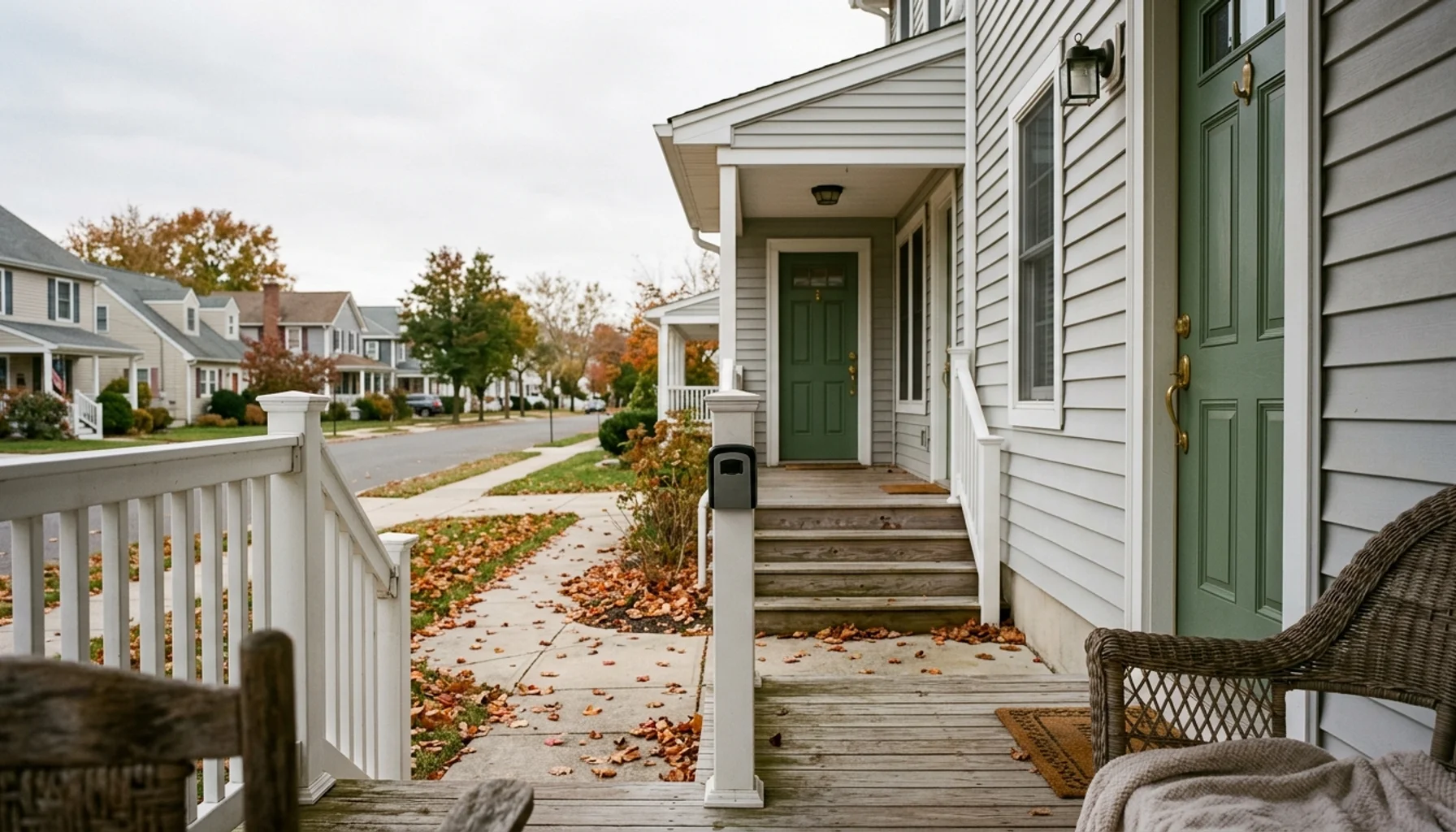
Property management in New Jersey for short-term rentals typically costs between 15% and 30% of monthly rental revenue, depending on whether you choose full-service management or a lighter co-hosting arrangement. At Endless Stays, we manage vacation homes across the Jersey Shore and beyond, and this guide breaks down exactly what you get for that fee.
Key Takeaways
- Full-service property management in New Jersey generally runs 15-30% of gross rental revenue, according to industry benchmarks reported by Premier Villa Group in February 2026.
- New Jersey welcomed 123.7 million visitors in 2026, spending a record $50.6 billion, per the state’s Division of Travel and Tourism, a trend that keeps demand strong for well-managed short-term rentals.
- Across 30 tracked New Jersey short-term rental markets, average occupancy sits at 39.9% with an average daily rate of $361/night, according to 2026 AirROI data, though shore towns and urban hubs vary widely.
- Regulatory scrutiny differs sharply by town: most New Jersey short-term rental markets carry a low regulation profile, while Jersey City, Newark, and Asbury Park apply moderate to high oversight.
- Co-hosting, revenue management, listing optimization, and guest communication are distinct services with different price points, and owners often only need one or two, not a full bundle.
- The right property manager should be evaluated on fee transparency, local market knowledge, technology stack, and review consistency, not just the lowest quoted percentage.
If you own a vacation rental anywhere from Long Beach Island to Ocean Grove, you’ve probably run the math on whether hiring help is worth the cut of your revenue. That question gets more complicated in 2026 as New Jersey’s rental vacancy rate climbed to 4.9%, up from 3.6% the year before, according to Census Bureau data tracked by FRED, signaling a market with more competition for guest attention than in recent years.
This guide covers what short-term rental property management in New Jersey actually includes, what it costs by service type, how fees compare across the state, and the specific questions you should ask before signing a management agreement. We’ll also walk through New Jersey’s patchwork of local short-term rental rules, since a single statewide standard doesn’t exist and enforcement varies by municipality.
Table of Contents
- How Much Does a Property Manager Cost in NJ?
- What Does a Short-Term Rental Management Company Actually Do?
- What Is the 80/20 Rule in Property Management?
- What Is Required to Be a Property Manager in New Jersey?
- How Much Do Property Managers Make in New Jersey?
- Co-Hosting vs. Full-Service Management: Which Fits Your Property?
- What Short-Term Rental Regulations Apply Across NJ Towns?
- How Do You Choose the Right Property Manager in New Jersey?
- What Red Flags Should You Watch for in a Management Contract?
- Is Hiring a Property Manager Worth It for Your NJ Rental?
- Frequently Asked Questions
How Much Does a Property Manager Cost in NJ?
Property management in New Jersey typically costs 15% to 30% of monthly rental revenue for full-service short-term rental management, according to benchmarks published by Premier Villa Group in February 2026. Co-hosting arrangements, where an owner stays involved in bigger decisions, usually land on the lower end of that range or charge a flat monthly fee instead.
Specifically, the percentage you pay depends on what’s bundled in: guest communication, cleaning coordination, dynamic pricing, and listing optimization all add cost. A manager charging 15% might only handle guest messaging and basic scheduling, while one charging closer to 30% often includes full revenue management and 24/7 support. As a result, comparing two quotes side by side without knowing what’s included is one of the most common mistakes we see owners make.
Additionally, geography matters. A three-bedroom house near the boardwalk in Belmar or Bradley Beach commands a higher nightly rate than an inland property, so the same percentage fee generates very different dollar amounts. Long Beach Township posts the highest average daily rate in the state at $855/night, per AirROI’s 2026 data, which changes the fee math considerably compared to a market like Jersey City, where nightly rates run lower but occupancy and listing volume are much higher.
| Service Model | Typical Fee Range | Best For |
|---|---|---|
| Co-hosting / part-time support | 10-20% or flat monthly fee | Owners who want to stay involved but need turnover and messaging backup |
| Full-service management | 20-30% of revenue | Out-of-state owners or those with multiple properties who want a full handoff |
| Revenue management add-on | Often bundled, sometimes 3-8% standalone | Owners with an existing team who only need pricing strategy |
| Listing optimization (one-time) | Flat project fee or bundled in monthly rate | First-time hosts or underperforming listings |
For a deeper cost breakdown specific to this region, our short term rental management NJ cost guide walks through line-item pricing across coastal and inland markets.
What Does a Short-Term Rental Management Company Actually Do?
A short-term rental property management company handles the day-to-day operations of a vacation rental so the owner doesn’t have to, covering guest communication, cleaning coordination, pricing strategy, and listing upkeep. In practice, this means someone else is answering the 11pm message about a broken lockbox instead of you.
First, guest communication and support covers every message from the initial booking inquiry through checkout, plus handling issues that come up mid-stay, like a lost key or an air conditioning question. Second, listing optimization means keeping photos, descriptions, and amenity tags current across Airbnb and VRBO so the property ranks well in search and converts views into bookings. Third, revenue management adjusts nightly rates based on demand signals like local events, school breaks, and shoulder-season dips, rather than leaving a static rate in place year-round.
Additionally, most full-service management includes cleaner and maintenance coordination between guest stays, financial reporting so owners can track net revenue, and compliance monitoring for local permit renewals. At Endless Stays, our team handles these functions across properties in Ocean Grove, Belmar, Bradley Beach, and beyond, and the pattern we consistently see is that owners underestimate how much time turnover logistics alone consume until someone else takes it off their plate.
What Is the 80/20 Rule in Property Management?
The 80/20 rule in property management is a version of the Pareto Principle, suggesting that roughly 80% of a property’s problems, maintenance issues, or guest complaints tend to come from about 20% of causes, whether that’s a specific unit, a specific guest segment, or a specific recurring issue. Applied to short-term rentals, it means most of your operational headaches trace back to a small set of fixable root causes.
For example, a manager tracking maintenance tickets across a portfolio might notice that one appliance model or one turnover vendor accounts for the bulk of guest complaints. Similarly, a small percentage of bookings, often same-day or last-minute reservations, can generate a disproportionate share of communication issues. Recognizing this pattern lets a manager focus fixes where they matter most instead of spreading attention evenly across every property.
In practical terms, this is exactly why data tracking matters in professional management. Without a system logging tickets, reviews, and turnover notes, an owner has no way to spot which 20% is driving their headaches. This is one reason full-service managers who use structured software tend to catch recurring issues faster than owners self-managing from a spreadsheet or a string of text messages.
What Is Required to Be a Property Manager in New Jersey?
Requirements to operate as a property manager in New Jersey vary depending on whether the role involves long-term residential leasing or short-term vacation rental co-hosting, and the specific licensing rules differ by activity type and municipality. Generally, activities that involve negotiating leases or collecting rent on behalf of an owner can trigger real estate licensing requirements under state law, so it’s worth confirming your specific setup with a licensed professional or the New Jersey Department of Community Affairs before assuming any exemption applies.
Beyond state-level considerations, individual towns layer on their own short-term rental registration or permitting requirements. Coastal municipalities in Monmouth and Ocean County, for instance, may require a rental unit registration, a certificate of habitability, or a local business license before a property can legally host paying guests overnight. As of 2026, enforcement intensity varies considerably. Some shore towns actively audit listings against local registries, while others apply lighter oversight.
Because these rules shift and differ block by block in some towns, the safest approach is always to verify current requirements directly with your municipal clerk’s office or zoning department rather than relying on a blog post or a neighbor’s experience. A property manager worth hiring should already know these local nuances and be able to walk you through what applies to your specific address.
How Much Do Property Managers Make in New Jersey?
Property manager earnings in New Jersey vary widely based on portfolio size, fee structure, and whether the manager operates independently or through a larger firm, and no single verified statewide average figure applies cleanly to short-term rental management specifically. Income for a management company scales with the number of properties managed and the percentage fee charged on each, so a manager overseeing a dozen high-performing shore properties earns substantially more than one managing a single inland unit part-time.
For context, some of the state’s larger residential and community-association management firms serve enormous populations. SEOlium’s 2026 ranking of New Jersey property management companies notes that the top-ranked firm alone reportedly serves a population base of nearly 1.8 million, illustrating just how much scale varies across this industry. Short-term rental management operates differently from HOA or long-term residential management, though, since revenue ties directly to nightly rates and occupancy rather than fixed monthly rent rolls.
As a result, a short-term rental manager’s earnings depend heavily on the markets they serve. A portfolio concentrated in Long Beach Township, where average daily rates lead the state at $855/night, generates very different management revenue than one concentrated in a lower-ADR inland market, even at the same fee percentage.
Co-Hosting vs. Full-Service Management: Which Fits Your Property?
Co-hosting is a partial management arrangement where an owner keeps decision-making control while a co-host handles specific operational tasks like guest messaging or turnover coordination, whereas full-service management hands over nearly every operational decision to the management company. The right choice depends on how much involvement you actually want to retain.
Specifically, co-hosting works well for owners who enjoy parts of hosting, maybe setting their own house rules or picking their own cleaner, but who need backup for the exhausting parts: answering messages at odd hours, coordinating same-day turnovers, or handling a guest emergency while at their own job. Full-service management, in contrast, suits out-of-state owners or those with multiple properties who want zero day-to-day involvement and are comfortable trading more revenue percentage for complete hands-off operation.
This is exactly the gap co-hosting fills for many of our clients. Endless Stays offers co-hosting for owners who want support without a total handoff, alongside full-service management, revenue management, listing optimization, and guest communication as standalone or bundled services. One owner we worked with launched a property and generated thousands in direct bookings within 90 days, reaching 90% occupancy six months out through a mix of direct bookings and multichannel marketing, and earned a top 5% guest favorite badge in the area, a result that came from combining several of these services rather than picking just one.
If you’re still weighing whether outside help makes sense at all, our article on should I hire a property manager walks through the six questions worth answering first.
What Short-Term Rental Regulations Apply Across NJ Towns?
Short-term rental regulations in New Jersey are set at the municipal level rather than through a single statewide ordinance, meaning requirements for permits, rental day caps, and enforcement differ significantly from one town to the next. According to AirROI’s 2026 regulatory classification, 26 of 30 tracked New Jersey short-term rental markets carry a low regulation profile, while Jersey City and Newark apply a moderate profile and Asbury Park is classified among the high-regulation markets.
In practice, a low-regulation classification generally means lighter permitting burdens and less active enforcement, while high-regulation markets may involve strict licensing, annual rental day caps, or more consistent audits of listings against local registries. Jersey City in particular has published specific short-term rental laws and regulations that owners operating in that market need to review directly, since urban markets tend to layer zoning and housing-stock protections on top of standard registration requirements.
Owners should also confirm state-level tax obligations. New Jersey applies sales and use tax rules to short-term rental stays, and the New Jersey sales and use tax rules for short-term rentals published by the state treasury outline current registration and collection requirements. Because these figures and thresholds change periodically, always confirm the current rate and filing requirement directly with the state rather than relying on a secondhand summary. This is an area where a property manager who already operates across multiple NJ towns, like Endless Stays does across Ocean Grove, Belmar, and Bradley Beach, can save you from an expensive compliance mistake.
How Do You Choose the Right Property Manager in New Jersey?
Choosing the right property manager in New Jersey means evaluating fee transparency, service scope, local market knowledge, and review consistency rather than defaulting to whichever company quotes the lowest percentage. A cheap fee that doesn’t include dynamic pricing or responsive guest communication often costs more in lost bookings than it saves.
Use this checklist when interviewing potential managers:
- Ask for an itemized breakdown of what the quoted percentage includes: guest messaging, cleaning coordination, pricing strategy, and photography are often separate line items even when bundled into one number.
- Request specific performance data from properties they currently manage, including occupancy rate, average daily rate, and review score trends over the past 12 months.
- Confirm how guest messages are handled outside business hours. Slow response times directly hurt Superhost status and search ranking on Airbnb and VRBO.
- Ask which pricing tool or strategy they use for dynamic pricing, and whether adjustments account for local events, not just generic seasonal patterns.
- Clarify contract length and termination terms before signing anything. A manager confident in their results shouldn’t need a long lock-in period to keep your business.
- Verify their familiarity with your specific municipality’s short-term rental registration requirements, since a manager unfamiliar with local rules is a compliance risk.
Companies like Keyrenter North Jersey Property Management and HomeRiver Group New Jersey serve broader residential and rental markets across the state, while boutique operators tend to specialize more narrowly in vacation rental turnover and revenue strategy. For a nationwide comparison of fee structures, the Airbnb management in New Jersey overview from Awning is a useful reference point. If you want a broader directory of options beyond the names covered here, this list of New Jersey vacation and short-term rental management companies is a reasonable starting point for further research.
What Red Flags Should You Watch for in a Management Contract?
Red flags in a short-term rental management contract include vague fee language, automatic long-term renewal clauses, and a lack of clear reporting on revenue and occupancy, all of which can trap an owner in an underperforming arrangement. Reading the contract line by line before signing protects you from surprises months later.
Watch for these specific warning signs: a percentage fee that doesn’t specify what’s included, meaning cleaning, supplies, or marketing costs get billed separately without disclosure upfront. Additionally, be cautious of contracts with no defined termination window, or ones that impose a steep penalty for leaving early even when performance has been poor. A manager without a transparent monthly reporting process, showing occupancy, revenue, and expenses, makes it nearly impossible to evaluate whether the arrangement is actually working.
Finally, ask directly how guest reviews and ratings are monitored and whether the manager has maintained consistent review scores across their existing portfolio. A pattern of declining reviews across managed properties is one of the clearest signals that operational quality has slipped, regardless of what the sales pitch promises.
Is Hiring a Property Manager Worth It for Your NJ Rental?
Hiring a property manager is generally worth it for New Jersey short-term rental owners who are out-of-state, managing multiple properties, or spending significant personal time on guest communication and turnovers that could otherwise go toward higher-value work. The trade-off is straightforward: you give up a percentage of revenue in exchange for time, consistency, and often better pricing performance than a self-managed listing achieves.
Consider the math. New Jersey’s short-term rental markets averaged $2,602 in monthly revenue across 30 tracked cities in 2026, according to AirROI. If professional revenue management and listing optimization push a property’s occupancy or nightly rate up even modestly compared to a static, self-managed listing, that gain can offset the management fee entirely, sometimes with room to spare. This is the exact case one recent client experienced, generating thousands in direct bookings and reaching 90% occupancy within six months of launch.
On the other hand, an owner who genuinely enjoys hands-on hosting, lives close to the property, and only manages one unit may find that self-managing, or a lighter co-hosting arrangement, makes more sense than full-service management. There’s no universal right answer here. It depends on your time, your distance from the property, and how many units you’re juggling.
Data & Evidence: How NJ Property Management Fees Compare by Market
New Jersey’s short-term rental economics vary dramatically by region, and understanding those differences helps explain why management fees aren’t one-size-fits-all across the state. Hoboken posts the highest occupancy rate among markets with 100 or more listings at 54.1%, generating roughly $3,826 in monthly revenue at a $320 average daily rate, according to AirROI’s 2026 data. Jersey City leads in total listing volume with 1,555 active listings and average monthly revenue near $2,429.
| Market | Key Metric | What It Means for Owners |
|---|---|---|
| Jersey City | 1,555 active listings, ~$2,429/month revenue | High competition means listing optimization matters more to stand out |
| Hoboken | 54.1% occupancy, $320 ADR | Strong booking consistency lowers vacancy risk for owners |
| Long Beach Township | $855/night ADR, 34.5% occupancy | Premium seasonal pricing rewards dynamic rate strategy over flat rates |
| Statewide average (30 markets) | 39.9% occupancy, $2,602/month, $361 ADR | Baseline for evaluating whether a specific property is over- or under-performing |
Notably, coastal towns like those in Monmouth and Ocean County, where Endless Stays manages properties including The Bradley Breeze in Bradley Beach and A Shore Thing in Belmar, tend to command higher seasonal ADRs but see sharper occupancy swings between peak summer months and shoulder seasons. That seasonality is exactly why dynamic pricing outperforms a flat nightly rate in shore markets. A static rate set in June often either scares off shoulder-season bookings in October or leaves money on the table during a sold-out July weekend.
Deep-Dive: Why Listing Optimization and Pricing Strategy Matter More Than Ever in 2026
New Jersey’s rental vacancy rate climbed to 4.9% in 2026, a notable jump from the tighter 3.1% to 3.7% range seen between 2021 and 2026, according to Census Bureau data. That loosening market means more competing inventory and, for short-term rentals specifically, a more crowded field of listings competing for the same guest searches on Airbnb and VRBO.
In this environment, a listing with outdated photos, an incomplete amenity list, or a generic title gets buried in search results, even if the property itself is excellent. This is precisely where listing optimization pays for itself. Our team at Endless Stays has helped properties break into the top three to five ranked listings in competitive markets like Monmouth County by rebuilding titles, photos, and descriptions from the ground up, then pairing that with responsive guest communication that keeps review scores high.
At the same time, 2026 brings tailwinds worth watching. Major events like the FIFA World Cup 2026 are cited by New Jersey’s tourism office as a driver expected to further boost visitation, building on a state that already saw record tourism spending of $50.6 billion in 2026. Properties positioned well ahead of demand spikes like these, with dynamic pricing already in place, capture meaningfully more revenue than those scrambling to adjust rates after demand has already shifted. Dynamic pricing removes the guesswork here. Our revenue management approach at Endless Stays has driven occupancy above 80% with strong REVPAR across our portfolio by adjusting rates daily based on real demand signals, including local events and school breaks, rather than gut feeling.
If you’re evaluating whether your own listing needs this kind of overhaul, our guide on vacation rental New Jersey strategy covers the specific traits that separate top-performing shore listings from the rest of the pack.
Frequently Asked Questions
How much does a property manager cost in NJ?
Property management for short-term rentals in New Jersey typically costs 15% to 30% of monthly rental revenue, according to Premier Villa Group’s 2026 industry benchmarks. Co-hosting arrangements often land at the lower end, while full-service management with revenue management and listing optimization included tends toward the higher end.
What is the 80/20 rule in property management?
The 80/20 rule suggests that roughly 80% of a property’s operational problems or complaints trace back to about 20% of underlying causes, such as one recurring maintenance issue or a specific guest booking pattern. Property managers use this principle to prioritize fixes that resolve the most frequent sources of friction first.
What is required to be a property manager in New Jersey?
Requirements depend on the type of management activity, since lease negotiation and rent collection can trigger real estate licensing rules under state law, while short-term rental co-hosting may fall under different municipal registration requirements. Confirm your specific obligations with the New Jersey Department of Community Affairs and your local municipal clerk before operating.
How much do property managers make in New Jersey?
Earnings vary widely based on portfolio size and market, since short-term rental management revenue ties directly to the properties’ nightly rates and occupancy rather than a fixed salary. A manager overseeing several high-performing shore properties in markets like Long Beach Township, where ADR averages $855/night, earns considerably more than one managing a single lower-rate inland unit.
What’s the difference between co-hosting and full-service property management?
Co-hosting keeps the owner involved in major decisions while a co-host handles specific tasks like guest messaging or turnover coordination, whereas full-service management takes over nearly all operational decisions. Co-hosting typically costs less and suits owners who want partial involvement, while full-service suits out-of-state or multi-property owners wanting a complete handoff.
Do I need a permit to run a short-term rental in New Jersey shore towns?
Many New Jersey shore towns require some form of rental registration, habitability certificate, or local business license before you can legally host short-term guests, though specific requirements vary by municipality. Regulation profiles also differ significantly, with most tracked markets carrying a low regulation classification while towns like Asbury Park apply stricter oversight, so always verify current rules with your local clerk’s office.
How does dynamic pricing affect my nightly rate as an owner?
Dynamic pricing adjusts your nightly rate continuously based on demand signals like local events, seasonality, and booking pace, rather than leaving one flat rate in place year-round. This approach typically captures more revenue during high-demand periods while keeping occupancy stronger during shoulder seasons compared to static pricing.
Can I use my vacation rental personally and still rent it out the rest of the year?
Yes, many New Jersey vacation rental owners block off personal-use dates while renting the property the remainder of the year, and most professional management agreements accommodate this with a shared calendar system. Confirm how your specific management company handles owner block-out dates and how far in advance you need to request them.
The Bottom Line on Property Management in New Jersey for 2026
Property management in New Jersey isn’t a one-size-fits-all service, and the right fit depends on how hands-on you want to stay, how many properties you own, and which town’s regulations apply to your address. Fees generally run 15% to 30% of revenue, but the value comes from what’s actually included: responsive guest communication, dynamic pricing, listing optimization, and someone who already knows your municipality’s registration rules.
With New Jersey tourism setting records year after year and 2026 bringing additional demand drivers like the FIFA World Cup, a well-managed listing has real upside this year compared to one left on autopilot. Whether you’re weighing co-hosting against full-service management, or you’re just trying to figure out if your current setup is leaving money on the table, the details in this guide should make that decision considerably easier.
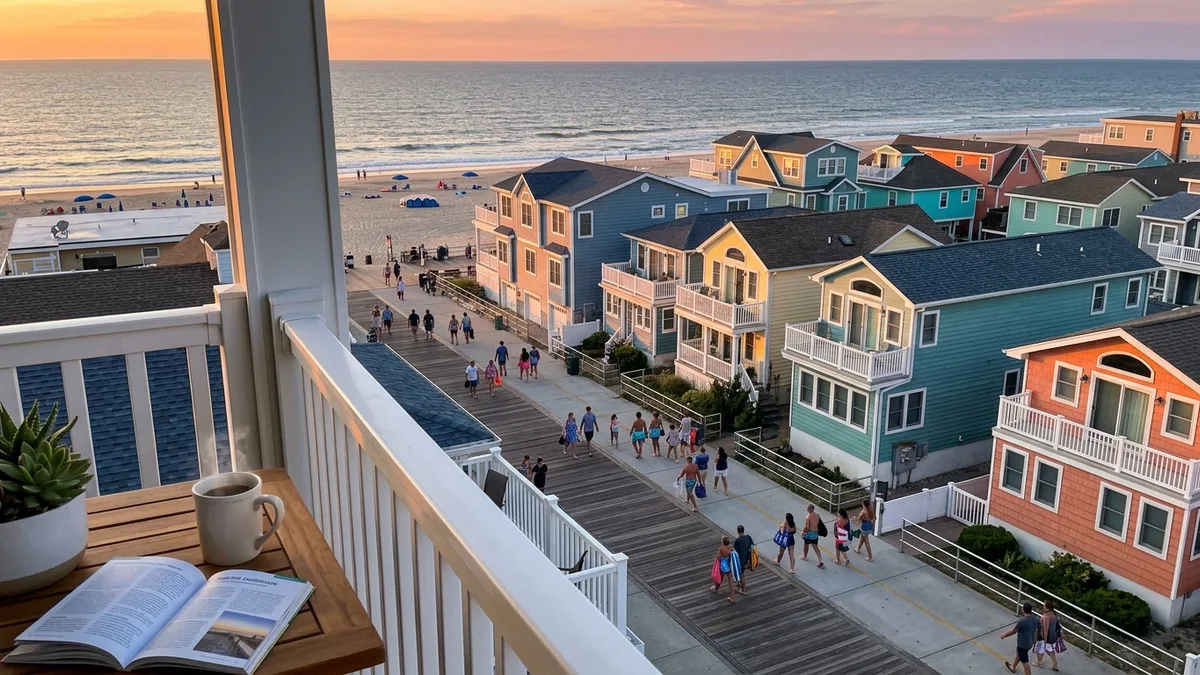
If you’re an owner weighing whether professional management makes sense for your New Jersey property, Endless Stays manages hand-kept vacation homes across the Jersey Shore, from Ocean Grove to Belmar, with results like sustained occupancy above 80% and Superhost status held for 25-plus consecutive quarters. Reach out to talk through co-hosting, listing optimization, or full revenue management built around your specific property.