
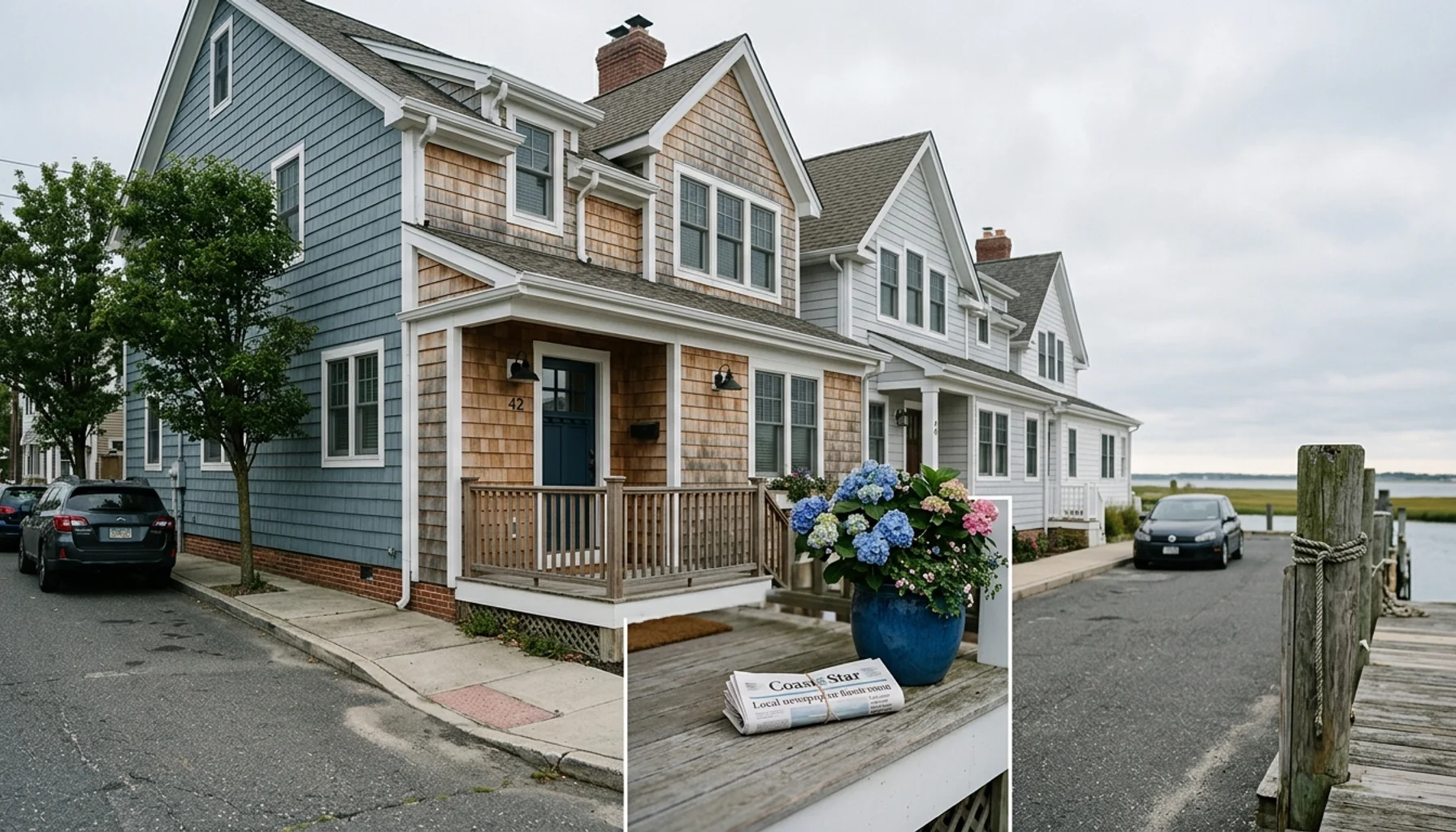
Airbnb management in New Jersey typically means a company or co-host handles four core functions on your behalf: listing optimization, dynamic pricing, guest communication, and owner reporting, usually for a fee between 10% and 30% of monthly rental revenue. Endless Stays manages hand-kept properties across the Jersey Shore, including Belmar, Bradley Beach, and Ocean Grove, and this guide breaks down exactly what a full-service management agreement should cover before you sign one.
Key Takeaways
- Full-service Airbnb management in New Jersey generally includes listing optimization, revenue/dynamic pricing, clear, proactive guest communication, and monthly owner reporting, bundled under a single management fee.
- Management fees across NJ providers typically range from 10% to 30% of rental revenue, with tiered plans (basic, plus, full-service) common among larger companies.
- According to Airbtics, New Jersey Airbnb markets average a 57.20% occupancy rate, $239 average daily rate, and roughly $49,792 in annual revenue per listing as of 2026 data.
- New Jersey short-term rentals owe a combined 11.625% in state sales tax and transient accommodation fees, and certain towns like Jersey City and Asbury Park carry stricter local licensing rules.
- Co-hosting is a lighter-touch alternative to full management, letting owners keep control of pricing or guest screening while outsourcing turnovers and messaging.
- New Jersey drew 123.7 million visitors in 2026 according to the state’s Division of Travel and Tourism, and 2026 is expected to bring added demand from major events like the FIFA World Cup.
If you own a rental property in Belmar, Ocean Grove, Bradley Beach, or anywhere along the Jersey Shore, you’ve probably hit the point where managing bookings yourself starts costing you more time than it’s worth. Maybe it’s the 11pm message about a broken thermostat. Maybe it’s realizing your nightly rate hasn’t changed since Memorial Day while every comparable listing down the block adjusted three times.
This guide walks through what full-service Airbnb management actually covers in New Jersey, what it typically costs, and how to tell if a management company or co-host is offering real value or just collecting a commission for forwarding your guest messages. We’ll also cover regulatory basics, seasonal demand patterns specific to Jersey Shore towns, and the questions you should ask before signing a management agreement.
As of 2026, New Jersey’s short-term rental market has grown more competitive, and more regulated in certain cities, which makes professional management a bigger differentiator than it was even two years ago.
Table of Contents
- What Does Airbnb Management in New Jersey Actually Include?
- How Does Listing Optimization Affect Bookings?
- How Does Dynamic Pricing Work for NJ Rentals?
- What Does Guest Communication Support Look Like?
- What Should Owner Reporting Include?
- What Do NJ Airbnb Management Companies Charge?
- What Permits and Taxes Apply to NJ Short-Term Rentals?
- Full-Service Management vs Co-Hosting: What’s the Difference?
- How Do You Switch From Self-Managing to a Full-Service Manager?
- How Do You Choose the Right NJ Airbnb Manager?
- Frequently Asked Questions
What Does Airbnb Management in New Jersey Actually Include?
Airbnb management in New Jersey refers to a bundled service where a company or co-host handles the operational and revenue-generating tasks of running a short-term rental, typically covering listing creation, pricing, guest support, cleaning coordination, and financial reporting. Specifically, full-service agreements combine four to six core functions rather than offering them piecemeal.
Most NJ management contracts include: professional listing optimization across Airbnb and Vrbo, dynamic pricing adjustments, clear, proactive guest messaging, cleaning and turnover coordination, maintenance dispatch, and monthly owner statements. Additionally, some providers add multi-channel distribution to Booking.com and Expedia, smart lock management, and compliance tracking for local permits.
As a result, owners paying for full-service management should expect to touch their property only for periodic inspections or personal-use blocks, not daily operations. In contrast, co-hosting arrangements typically cover a narrower slice, often just messaging and turnover logistics, while leaving pricing or guest screening to the owner. Notably, the scope varies significantly between providers, which is why reading the service agreement line by line matters more than comparing headline fee percentages.
How Does Listing Optimization Affect Bookings?
Listing optimization is the process of improving a rental’s title, photos, description, and amenity tags so it ranks higher in Airbnb and Vrbo search results and converts more views into bookings. Specifically, this covers professional photography, keyword-rich titles, structured descriptions, and accurate amenity filters that match how guests actually search.
A weak listing costs you bookings in ways that are hard to trace back to the cause. For example, a Belmar property that doesn’t mention its distance to F Street nightlife or beach badge inclusion loses out to a competitor listing that does, even if the properties are otherwise comparable. Our team at Endless Stays regularly rebuilds listing copy and photo sequencing for owners who assumed their low booking volume was a pricing problem when it was actually a visibility problem.
In competitive Monmouth County beach towns, small changes matter. Our client home in Bradley Beach, a three-bedroom apartment a five-minute walk from the boardwalk, ranks well partly because its listing leads with walkability and proximity, not generic adjectives. As of 2026, Airbnb’s search algorithm continues to weight response rate, review recency, and photo quality heavily, which means an outdated listing built in 2022 is quietly losing ground even if nothing about the property itself has changed.
How Does Dynamic Pricing Work for NJ Rentals?
Dynamic pricing is a revenue management approach that adjusts nightly rates daily based on demand signals like seasonality, local events, day of week, and booking lead time, rather than keeping one static rate year-round. In New Jersey shore markets specifically, this means rates shift dramatically between a July weekend and a mid-week stay in October.
According to Airbtics, New Jersey Airbnb markets averaged a 57.20% occupancy rate with a $239 average daily rate and roughly $49,792 in annual revenue per listing based on 2026 data. Separately, Guest Favorites reports New Jersey Airbnbs earning an average of $52,653 annually with a 47% occupancy rate and $305 average daily rate, a reminder that figures vary by data source and by exactly which towns get included in the sample.
Shore-town seasonality is not subtle. Jersey Shore properties peak between Memorial Day and Labor Day, especially around July 4th, while Jersey City and Hoboken hold steadier year-round demand from corporate and tourism traffic. As a result, a static rate that works in August will sit empty in a shoulder-season week, and a rate that’s competitive in October will underprice a holiday weekend. Dynamic pricing removes that guesswork by adjusting rates against real booking pace, not a gut feeling set once at the start of the season.
| NJ Market Type | Typical Pattern | Example Data Point |
|---|---|---|
| Jersey Shore (Belmar, LBI, Cape May) | Sharp seasonal peak, summer-heavy | Long Beach Township ADR of $855, 34.5% occupancy (AirROI 2026) |
| Urban Gold Coast (Jersey City, Hoboken) | Steadier year-round demand, lower ADR | Hoboken occupancy of 54.1%, $320 ADR (AirROI 2026) |
| Statewide average (30 tracked markets) | Mixed seasonal and urban blend | 39.9% occupancy, $361 ADR, $2,602/month revenue (AirROI 2026) |
What Does Guest Communication Support Look Like?
Guest communication support means a management team or co-host handles inquiries, check-in instructions, in-stay questions, and issue resolution with clear, proactive communication, so urgent problems get handled promptly. Specifically, this includes pre-booking questions, automated check-in details, and live response during a guest’s actual stay.
Response time affects more than guest satisfaction. Airbnb’s search ranking and Superhost qualification both weigh response rate and speed, meaning a slow reply on a Tuesday afternoon can quietly hurt a listing’s visibility weeks later. At Endless Stays, guest messages typically get answered in minutes rather than hours, one reason our managed properties have maintained 5-star reviews for over 12 consecutive months across multiple listings.
For example, a family staying at The Asbeary Cottage near Pigeon Forge Parkway who has a hot tub question at 9pm needs a real answer that night, not a canned response the next morning. Automated messaging tools help with logistics like check-in codes, but they still miss nuance, a guest asking about parking during a local festival needs a locally-informed answer, not a template. That’s the gap trained, market-specific hosts fill that generic chatbots cannot.

What Should Owner Reporting Include?
Owner reporting is the monthly or periodic financial summary a management company provides showing revenue, occupancy, expenses, and upcoming bookings for a managed property. At minimum, a useful report breaks down gross revenue, management fees deducted, cleaning costs, and net payout by month.
Beyond the basic numbers, a report worth reading also shows occupancy rate trends, average daily rate by month, and a comparison against the prior period or a similar comp set. For instance, an owner in Ocean Grove should be able to see whether The Embury Hideaway’s October occupancy improved year over year, not just what last month’s payout was.
Transparency matters most for out-of-state owners who can’t casually check on the property. A report that hides cleaning fees inside a lump “expenses” line or fails to itemize maintenance calls makes it harder to evaluate whether the management fee is earning its keep. As a general rule, ask any prospective manager for a sample owner statement before signing, not after your first payout arrives.
What Do NJ Airbnb Management Companies Charge?
Airbnb management fees in New Jersey typically run 15% to 30% of gross booking revenue for full-service management and 10% to 18% for co-hosting, with the percentage tied to how much service is bundled in. Lighter co-hosting packages sit at the low end, while full-service management with multi-channel distribution, pricing and maintenance coordination sits at the high end.
Some managers structure this as tiered plans: a basic co-hosting tier, a middle tier that adds pricing and maintenance coordination, and a full-service tier, with luxury coastal homes usually priced at the top of the range.
As a result, comparing two management quotes by percentage alone is misleading. A 15% fee that includes professional photography, dynamic pricing software, and clear, proactive guest support delivers more value than a 12% fee that only covers basic messaging. Ask exactly what’s bundled at each tier, and request a written breakdown rather than relying on a sales call summary. For a deeper cost comparison specific to this market, see our breakdown of what short-term rental management really costs in NJ.
What Permits and Taxes Apply to NJ Short-Term Rentals?
New Jersey short-term rental taxes combine a 6.625% state sales tax with an additional 5% transient accommodation fee, totaling 11.625% before any local occupancy taxes are added. This applies broadly across the state, though local licensing requirements vary significantly by municipality.
Regulation intensity differs town to town. According to AirROI’s 2026 New Jersey market data, Jersey City and Asbury Park are classified as “High” regulation markets, meaning stricter licensing, potential annual rental day caps, and active enforcement. Newark and Elizabeth fall into a “Moderate” category with some permit or registration requirements, while 26 of 30 tracked NJ short-term rental markets carry a “Low” regulation profile, generally operator-friendly with minimal licensing hurdles.
Specifically, Jersey City and Newark require STR permits or business licenses, and Jersey City has published its own local ordinance details through the Jersey City short-term rental laws and regulations page. Because rules and rates change periodically, confirm current requirements directly with the New Jersey Department of Community Affairs (DCA) and the New Jersey sales and use tax rules for short-term rentals before listing a new property, particularly in a high-regulation town. A property manager familiar with your specific municipality should already track these deadlines as part of full-service compliance monitoring.
Full-Service Management vs Co-Hosting: What’s the Difference?
Full-service management means a company handles nearly every operational and revenue task for a rental property, while co-hosting is a lighter arrangement where the owner retains control of certain decisions, like pricing or guest screening, and outsources only specific tasks like messaging or turnovers.
It helps to separate “Airbnb management” (platform-specific tasks like messaging, calendar syncing, and reviews) from broader “vacation rental management” that spans multiple channels plus cleaning and maintenance. Co-hosting typically fits this narrower, platform-specific definition.
This is exactly the gap co-hosting fills for owners who aren’t ready to hand off everything. Endless Stays offers co-hosting and co-management built for owners who want backup on turnovers and guest communication but still want a say in bigger decisions like pricing strategy or which guests to approve. Unlike hiring a local contact through a Facebook group, this approach pairs a full operational system, communication, dynamic pricing awareness, and compliance oversight, with a lighter, co-hosting level of involvement rather than a total handoff.
| Feature | Co-Hosting | Full-Service Management |
|---|---|---|
| Typical fee range | 10% to 15% of revenue | 15% to 30% of revenue |
| Pricing control | Often owner-controlled | Manager sets dynamic pricing |
| Guest messaging | Outsourced | Outsourced, with prompt handling of urgent issues |
| Listing optimization | Owner or shared responsibility | Fully handled by manager |
| Multi-channel distribution | Rarely included | Commonly included |
| Best fit | Hands-on owners wanting partial relief | Out-of-state or burned-out owners wanting full handoff |
How Do You Switch From Self-Managing to a Full-Service Manager?
Switching from self-managing to a full-service Airbnb manager in New Jersey involves an onboarding period, typically two to four weeks, where the new manager audits the existing listing, migrates guest communication, and sets up pricing tools without disrupting confirmed reservations. Specifically, existing bookings stay honored under the terms guests originally booked.
First, the manager reviews current listing photos, description, and review history to identify quick wins. Additionally, they’ll typically request access to the Airbnb and Vrbo accounts, either through co-hosting permissions or a full account transfer, depending on the agreement structure. Existing 5-star reviews carry over since they’re tied to the platform listing, not the previous manager.
One common owner mistake is waiting too long to switch, letting a stagnant listing accumulate months of flat pricing and slow response times before making a change. In contrast, owners who transition during a slower season, rather than mid-summer at the Jersey Shore, give the new manager time to optimize before peak demand hits. One property we onboarded generated meaningful direct bookings within its first 90 days and reached 90% occupancy six months out through a combination of direct bookings and multichannel marketing, eventually earning a top 5% guest favorite badge in its area.
How Do You Choose the Right NJ Airbnb Manager?
Choosing the right Airbnb manager in New Jersey means comparing providers on service depth, pricing transparency, technology, and review consistency rather than fee percentage alone. Specifically, ask each candidate for a written scope of services, a sample owner report, and references from current clients in your specific town.
Start with these questions before signing anything:
- What exactly is included at each pricing tier, and what costs extra (photography, deep cleans, maintenance calls)?
- How is pricing set, manually or through dynamic pricing software, and how often is it adjusted?
- What’s the average response time to guest messages, and how are urgent issues handled overnight??
- Can I see a sample monthly owner statement before I commit?
- What happens to my existing reviews and bookings during onboarding?
- Does the manager track local permit and tax compliance for my specific municipality?
- What’s the cancellation or exit policy if the partnership isn’t working?
Approaches differ. National platforms lean on software and scale, while boutique local operators emphasize hands-on onboarding and local knowledge. Ask any manager you interview which model they run and who actually shows up at your property.
Frequently Asked Questions
What does full-service Airbnb management include in New Jersey?
Full-service Airbnb management in New Jersey typically includes listing optimization, dynamic pricing, clear, proactive guest communication, cleaning and turnover coordination, maintenance dispatch, and monthly owner financial reporting, all bundled under one management fee, usually 15% to 30% of revenue.
How much does an Airbnb manager cost in New Jersey?
Airbnb management fees in New Jersey generally run 15% to 30% of gross booking revenue for full-service management and 10% to 18% for co-hosting, with lighter co-hosting at the lower end and full-service, multi-channel management toward the higher end.
Do I need a permit to run a short-term rental in New Jersey?
Permit requirements vary by town. Jersey City and Newark require STR permits or business licenses, and Jersey City is classified as a high-regulation market with stricter enforcement. Most other tracked NJ markets carry a low regulation profile, but you should confirm current rules with the New Jersey Department of Community Affairs before listing.
What’s the difference between co-hosting and full property management?
Co-hosting typically covers platform-specific tasks like guest messaging and calendar syncing while the owner retains control of pricing or screening. Full-service management handles nearly everything, listing, pricing, guest communication, cleaning, maintenance, and reporting, so the owner stays hands-off.
How does dynamic pricing affect my nightly rate as an owner?
Dynamic pricing adjusts your nightly rate daily based on demand signals like season, local events, and booking lead time. In Jersey Shore markets, this means rates rise sharply for summer weekends and drop for shoulder-season weeks, capturing revenue a static rate would miss in both directions.
Can I still use my vacation rental personally if it’s professionally managed?
Yes. Most management agreements let owners block personal-use dates on the shared calendar in advance. This is common among second-home owners who want rental income the rest of the year without giving up their own vacation time at the property.
How do I switch from self-managing to a professional Airbnb manager?
Switching typically takes two to four weeks. The new manager audits your listing, migrates guest communication access, and sets up pricing tools while honoring existing confirmed bookings. Your review history stays intact since reviews are tied to the platform listing, not the manager.
Conclusion
Full-service Airbnb management in New Jersey comes down to four consistent pillars: a listing built to convert, pricing that moves with real demand, guest communication that never goes quiet, and owner reporting transparent enough to show whether the fee is earning its keep. With New Jersey’s short-term rental markets averaging a 57.20% occupancy rate and $239 average daily rate as of 2026 data from Airbtics, the gap between a well-managed listing and a stagnant one adds up fast over a full season.
As 2026 brings continued visitor growth to New Jersey, driven partly by major events like the FIFA World Cup, owners who treat management as a genuine partnership, not just an outsourced chore, tend to come out ahead.
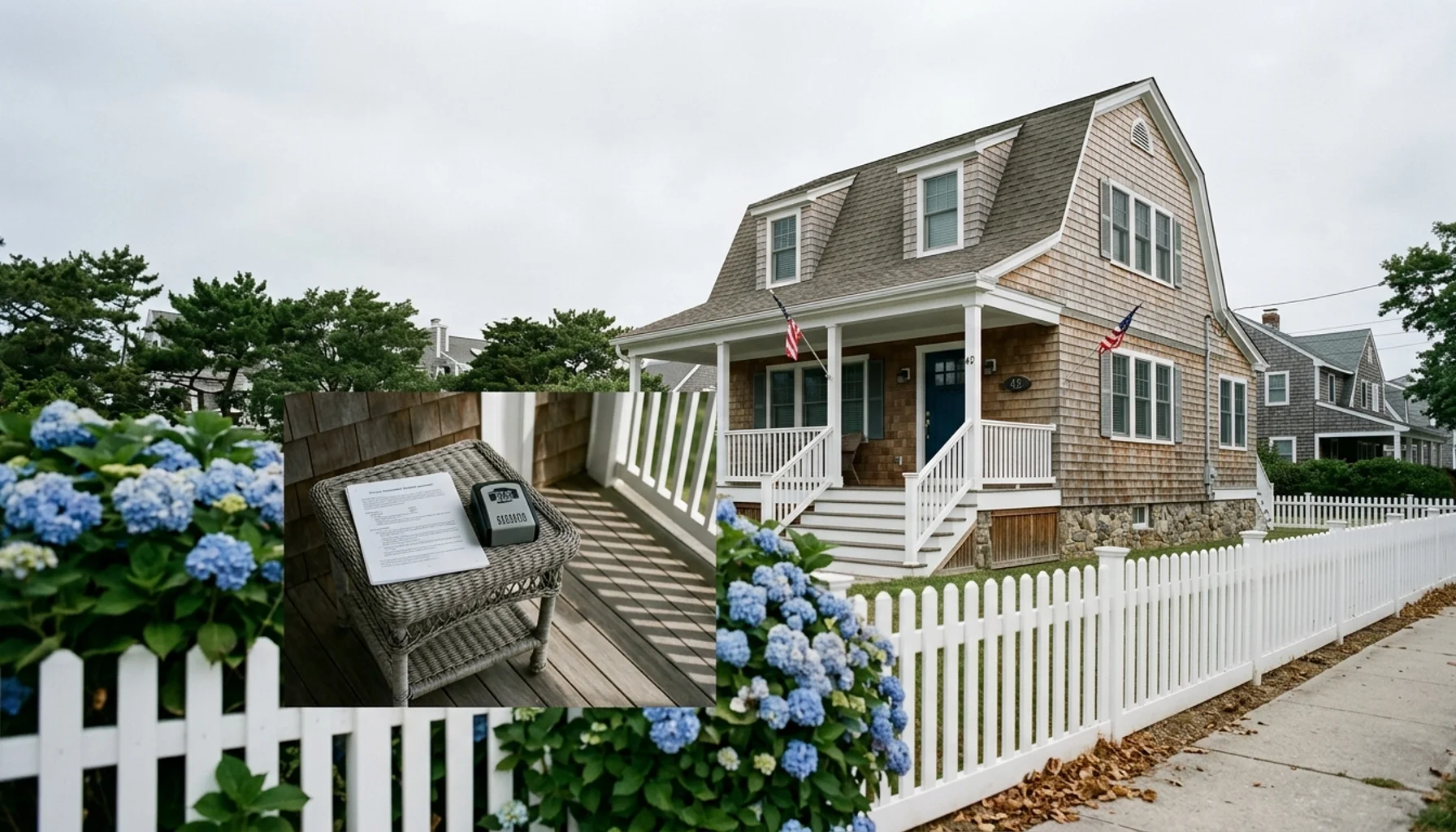
If you’re weighing whether to keep self-managing or hand things off to a team that already knows Belmar, Bradley Beach, and Ocean Grove inside and out, Endless Stays manages properties with Superhost status held for 25+ consecutive quarters and listings ranked in the top 3rd to 5th spot across competitive Monmouth County beach towns. Get started with Endless Stays to see what full-service management could do for your property.