
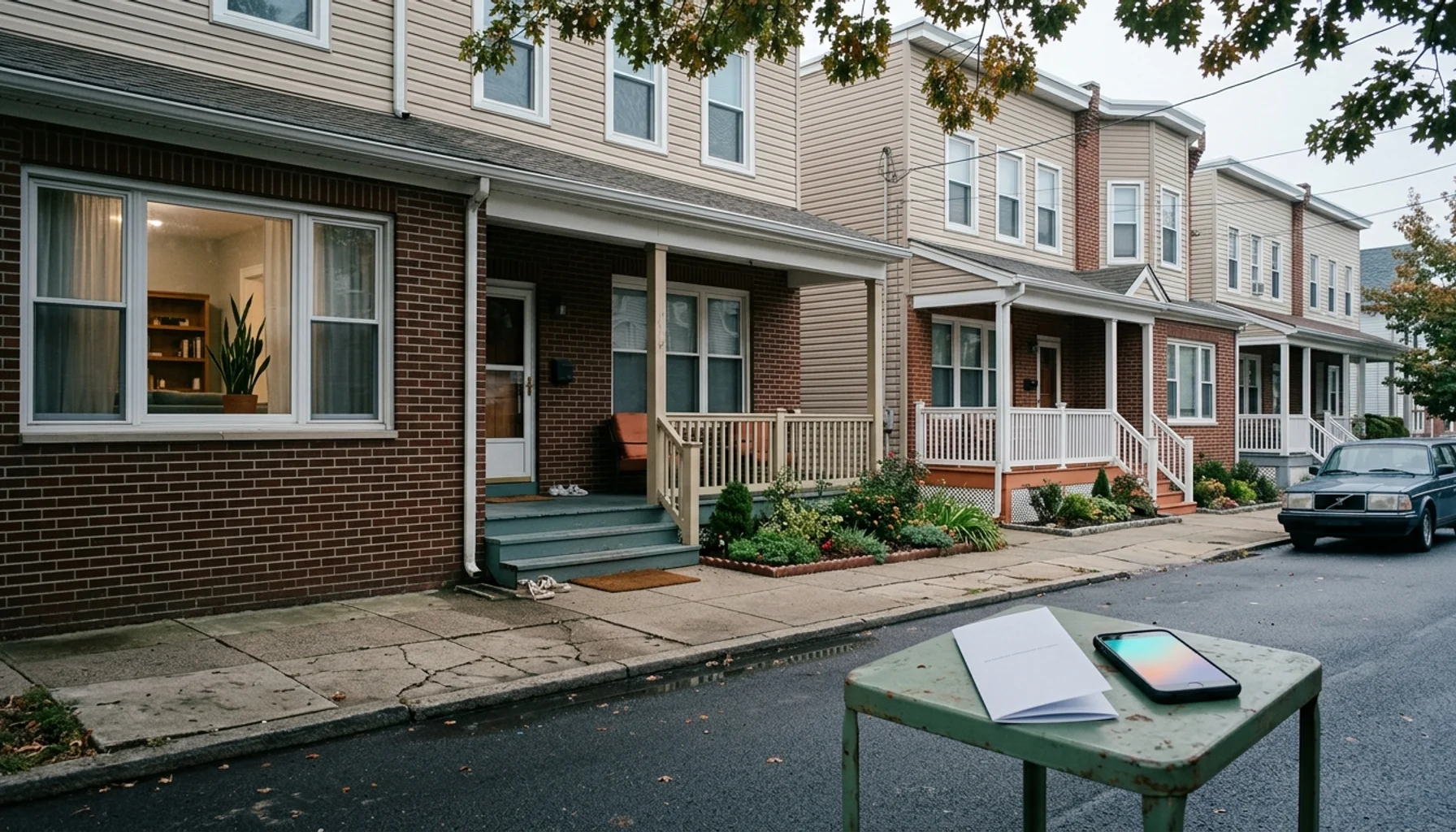
Short term rental management New Jersey (NJ) companies typically charge between 15% and 30% of gross booking revenue for full-service management, with co-hosting arrangements running lower, around 10% to 18%. At Endless Stays, we work with owners across the Jersey Shore and beyond who are weighing exactly this decision, and the fee structure only tells half the story. What’s included in that percentage matters more than the number itself.
Key Takeaways
- Full-service short term rental management New Jersey companies charge 15-30% of gross revenue, while co-hosting models typically run 10-18%.
- Jersey City recorded 3,251 active short-term rental listings as of June 2026, with a $209 average daily rate and 63% occupancy, according to AirDNA.
- New Jersey has no single statewide short-term rental ordinance; regulation happens at the municipal level, so a license valid in Belmar won’t necessarily work in Jersey City.
- New Jersey collects a 6.625% state sales tax on most short-term stays, and some counties layer on additional occupancy taxes.
- Professional management typically delivers 20-40% higher annual revenue than self-management through dynamic pricing and occupancy optimization, based on industry benchmarks from AirDNA and NARPM.
- New Jersey tourism spending is projected to reach $53.6 billion in 2026, a 3.2% increase, supporting continued demand for shore and inland rentals alike.
If you own a rental on Long Beach Island, in Belmar, or anywhere between Bradley Beach and Cape May, you’ve probably already run the math on whether a management fee is worth paying. Most owners overthink the percentage and underthink what’s actually inside it. A 20% fee that includes dynamic pricing, guest screening, and proactive guest communication can outperform a 15% fee that only covers listing syndication.
This guide breaks down what short term rental management New Jersey companies actually charge, what separates co-hosting from full-service management, and where the real costs hide, turnover cleaning, tax compliance, insurance, and the municipal permit maze that trips up even experienced owners. We’ll also cover the New Jersey-specific numbers: what Jersey City listings earn, what the state’s rental vacancy squeeze means for STR demand, and how towns from Ocean Grove to Hoboken handle registration differently.
What Is Short Term Rental Management and Why Does It Matter in New Jersey?
Short term rental management New Jersey providers handle the outsourced operation of a vacation rental’s day-to-day business, covering guest communication, pricing, cleaning coordination, and regulatory compliance, in exchange for a percentage of booking revenue. Management matters here specifically because the regulatory landscape shifts from town to town, and a company managing your Belmar bungalow needs different local knowledge than one managing a Jersey City condo.
New Jersey’s short-term rental market isn’t one market. It’s a patchwork of at least a dozen distinct micro-markets: the Shore towns (Belmar, Ocean Grove, Bradley Beach, Point Pleasant), the urban rentals in Jersey City and Hoboken, and inland towns near attractions or transit hubs. A management company that only knows Airbnb’s algorithm but not Belmar’s beach badge system, or Jersey City’s registration portal, will underperform. As of 2026, the difference between a manager who understands hyper-local seasonality and one running a generic playbook shows up directly in occupancy and review scores.
At Endless Stays, we’ve watched owners in Monmouth and Ocean counties assume management is just “someone who answers messages.” It’s closer to running a small hospitality business: pricing strategy, vendor coordination, tax remittance, and guest experience all under one roof. That’s the distinction you need to understand before you sign a contract.

How Much Can You Earn From a Short Term Rental in New Jersey?
Earnings from a New Jersey short-term rental depend heavily on location, with Jersey Shore towns and Jersey City posting some of the state’s strongest performance. According to Mashvisor data from March 2026, Point Pleasant Beach averaged a $544 daily rate with 51% occupancy and $7,313 in monthly rental income, while Brielle averaged $508 nightly at 48% occupancy for roughly $6,749 a month.
Further south, Point Pleasant proper averaged $528 nightly with 47% occupancy and $6,283 monthly, and Highland Mills came in at $534 nightly, 46% occupancy, and $5,892 monthly. Brick, NJ stood out with a higher $686 average daily rate but a lower 33% occupancy rate, translating to $4,139 in monthly income, a reminder that a high nightly rate doesn’t automatically mean high revenue if occupancy lags.
Jersey City tells a different story entirely. As of June 2026, AirDNA reported 3,251 active listings there earning an average of $22,300 per listing over the trailing twelve months, with 63% occupancy and a $209 average daily rate, and revenue per listing climbed 12.9% year-over-year from June 2026. That’s a lower nightly rate than the Shore towns but a longer booking season and steadier demand from business travelers and Manhattan commuters.
The takeaway: shore towns compete on nightly rate and summer intensity, while Jersey City competes on occupancy consistency. You need a pricing model that matches which game you’re actually playing.
What Are the Legal Requirements for Short Term Rentals in New Jersey Cities?
New Jersey does not have a single statewide short-term rental law; instead, each municipality sets its own registration, licensing, and zoning rules. This means a rental legally operating in Belmar could face entirely different requirements if the same owner tried to run an identical rental in Jersey City or Hoboken.
Jersey City requires hosts to register through the city’s own portal and comply with specific zoning and occupancy limits, detailed in the Jersey City short-term rental laws and regulations. If you’re considering a Hudson County property, check registration status before listing, since enforcement has tightened as the city’s STR inventory has grown past 3,000 active listings.
At the state level, the New Jersey Department of Community Affairs (DCA) vacation rental condo or dwelling license outlines requirements for certain classes of rental dwellings, which can apply depending on your property type and how many units you operate. Shore towns like Ocean Grove and Bradley Beach layer additional local ordinances on top, often tied to parking, occupancy caps, or rental term minimums during peak season.
Notably, Jersey City tightened enforcement around 2026 as its listing count grew, a pattern other high-demand New Jersey towns may follow as their own STR inventories expand through 2026. If you’re buying a property specifically for short-term use, confirm zoning and registration status with the municipal clerk before closing, not after.
What Do Short Term Rental Management Companies in New Jersey Charge?
Short term rental management companies in New Jersey typically charge between 15% and 30% of gross booking revenue for full-service management, according to industry benchmarks tracked by AirDNA and NARPM. Co-hosting arrangements, where you stay more involved, usually run lower, in the 10% to 18% range.
Full-service management generally includes listing optimization, dynamic pricing, guest communication, cleaning coordination, and compliance handling. Co-hosting typically covers a narrower scope, often guest messaging and turnover coordination, while you retain control over pricing decisions or major listing changes.
For comparison, platform fees add another layer regardless of who manages the property. Airbnb guests pay 14% of the total bill to book a rental while hosts pay roughly 3%, according to Mashvisor’s 2026 platform fee data. Vrbo works differently: hosts pay a flat 8% fee on the full booking price, while guests pay between 6% and 12% in commission. These platform fees stack on top of, not instead of, whatever percentage your management company charges.
Here’s how the main New Jersey management models compare:
| Management Model | Typical Fee Range | What’s Included | Best Fit |
|---|---|---|---|
| Full-Service Management | 15-30% of gross revenue | Pricing, guest comms, cleaning coordination, compliance, marketing | Out-of-state owners, multi-property investors |
| Co-Hosting | 10-18% of gross revenue | Guest messaging, turnover coordination, partial pricing input | Local owners who want to stay involved |
| Self-Management | 0% (plus platform fees) | Nothing outsourced; owner handles everything | First-time hosts with time to spare, single-property owners nearby |
| Nationwide Chain Managers | Often 25%+, standardized | Centralized systems, call-center guest support | Owners prioritizing scale over local nuance |
One pattern we consistently see across owners we talk to at Endless Stays: the cheapest fee percentage rarely produces the highest net income. A manager charging 18% who drives strong occupancy through local market knowledge often nets you more than a 15% fee paired with generic, one-size-fits-all pricing.
Co-Hosting vs. Full-Service Management: Which Fits Your Property?
Co-hosting is a partnership model where you retain decision-making authority while a co-host handles operational tasks like guest messaging, turnover logistics, and maintenance coordination. Full-service management, in contrast, hands over most or all day-to-day and strategic decisions, including pricing, to the management company.
The choice comes down to how much time and control you want to keep. If you enjoy curating your listing’s design or negotiating with your cleaner, but the 11 PM guest texts about the Wi-Fi password are wearing you down, co-hosting fills that exact gap. This is the middle-ground solution a lot of owners don’t realize exists between full DIY and total handoff. At Endless Stays, our co-hosting model means you stay involved in the big decisions while we handle the operational load, turnovers, guest issues, and same-day fixes.
Full-service management makes more sense if you’re an out-of-state owner, a multi-property investor, or you’ve decided the STR is an investment, not a hobby. Handing off pricing decisions to a team actively watching demand shifts (a Belmar summer weekend versus a Luray Caverns tourist surge, for example) tends to outperform a static, “set it once” approach.
Neither model is inherently better. If you live twenty minutes from your Ocean Grove rental, co-hosting might work fine for you. If you own a Jersey Shore property remotely while working a full-time job elsewhere, you’ll usually lose more money in missed pricing opportunities and slow guest responses than you’d ever spend on a full-service fee.
How Do You Optimize Pricing for Maximum Revenue in New Jersey?
Pricing optimization for New Jersey short-term rentals means adjusting nightly rates dynamically based on local demand signals, not setting one rate for the season and leaving it. Static pricing is the single most common mistake we see among self-managed owners, and it costs real money during both peak weeks and shoulder season.
Specifically, a Jersey Shore rental needs different pricing logic than a Jersey City condo. Shore properties see extreme seasonality: a Belmar rental might command premium summer weekend rates but sit soft in November. Jersey City, by contrast, holds steadier demand year-round given its proximity to Manhattan, so the pricing swings are smaller but the volume opportunity is more consistent.
This is where dynamic pricing pays for itself. We actively manage pricing across the season at Endless Stays, adjusting for local events, weather patterns, and booking pace rather than setting a rate once and hoping for the best. As a result, properties in our portfolio tend to capture premium rates during high-demand weekends (think Belmar in July or a Luray Caverns tourist surge) while staying competitively priced during softer weeks to protect occupancy.
For example, a shore rental sitting empty on a random Tuesday in September isn’t a pricing failure so much as a signal, drop the rate, and fill the night, rather than let it sit vacant hoping for a last-minute premium booker. Professional revenue management, based on AirDNA and NARPM benchmarks, typically delivers 20-40% higher annual revenue than self-managed pricing precisely because of this responsiveness.
How Do You Find and Screen Reliable Guests for Your NJ Rental?
Guest screening for New Jersey short-term rentals means verifying identity, reviewing platform history, and setting clear house rules before confirming a reservation, all while staying compliant with Fair Housing Act requirements. Screening isn’t about being suspicious of every inquiry; it’s about catching the small percentage of bookings that create real risk.
Airbnb and Vrbo both offer built-in verification tools, ID checks, review history, and messaging screening, that catch most red flags before you ever have to make a judgment call. Additionally, a clear house manual and pre-arrival messaging sequence reduces confusion that often escalates into bad reviews, regardless of how careful your screening was.
Response time is one of the most controllable factors in a listing’s review score, which is why we handle guest communication in-house at Endless Stays rather than outsourcing it to a call center. A guest who gets a real answer within minutes, from someone who actually knows the property, books again and leaves a five-star review far more often than one who waits hours for a scripted reply from an overseas center.
Practical screening steps for New Jersey hosts:
- Require ID verification through the booking platform before confirming any reservation.
- Review the guest’s prior review history for red flags, not just star ratings.
- Set clear occupancy limits in the listing and enforce them, especially in towns with local occupancy ordinances.
- Send a pre-arrival message covering parking, check-in logistics, and house rules specific to your municipality.
- Collect a damage deposit or use platform-provided protection where available.
What Should You Budget for Maintenance, Cleaning, and Turnover?
Turnover costs for a New Jersey short-term rental include cleaning, linen replacement, restocking consumables, and periodic maintenance, and these expenses scale with booking volume, not just property size. A higher-occupancy property, like a Jersey City condo running 63% occupancy, generates significantly more turnovers annually than a shore rental with a concentrated summer season. If you’re running a Jersey City condo at that occupancy rate, budget for roughly 230 turnovers a year; a Shore rental booked mostly on summer weekends might see closer to 60.
Cleaning fees for New Jersey vacation rentals typically get passed through to guests as a line item, but you (or your manager) still handle coordination, scheduling, quality control, key handoffs. Missed or rushed turnovers are one of the fastest ways to tank a review score, especially for same-day back-to-back bookings common during Shore summer weekends.
Maintenance costs are less predictable but no less important. A property with a fire pit, BBQ grill, or hot tub, amenities that show up in a large share of the properties Endless Stays manages, needs regular upkeep specifically because guests expect those features to work flawlessly. A broken hot tub jet or a grill that won’t light generates far more complaints than a slightly dated couch.
Budget-wise, you should plan for three buckets: cleaning costs per turnover (often passed to guests), an annual maintenance reserve of roughly 1-3% of the property’s value for HVAC, appliances, and outdoor features, and a contingency fund for emergency repairs, a burst pipe in February doesn’t wait for a convenient time. At Endless Stays, we typically recommend owners keep at least $1,500-$2,500 set aside per property for unplanned repairs during peak season, when a delayed fix costs you bookings, not just money.
What Are the Tax Implications of Short Term Rentals in New Jersey?
New Jersey applies a 6.625% state sales tax to most short-term rental stays, and some counties or municipalities add local occupancy taxes on top of that base rate. You need to understand both layers before setting rates or filing returns, since the combined tax burden varies by location.
Platforms like Airbnb are required under New Jersey law to collect and remit applicable sales and local excise taxes on behalf of hosts in certain municipalities, which simplifies compliance somewhat, but it doesn’t eliminate your responsibility to confirm those remittances are actually happening correctly. The New Jersey sales and use tax rules for short-term rentals from the state Division of Taxation lay out registration and filing obligations for hosts operating outside platform-managed remittance.
Income tax treatment is separate from sales tax. Rental income is generally reportable as income regardless of whether the property is your primary residence, a second home, or a pure investment property, so track deductible expenses (management fees, cleaning costs, mortgage interest, depreciation) carefully throughout the year rather than scrambling each spring.
This is exactly the kind of compliance detail that catches self-managed owners off guard, especially those who assumed the platform “handled the taxes” without checking which specific taxes were actually being remitted for their municipality.

Which New Jersey Areas Have the Highest Short Term Rental Demand?
Demand for New Jersey short-term rentals concentrates in three main zones: the Jersey Shore corridor (Belmar, Ocean Grove, Bradley Beach, Point Pleasant, Long Beach Island), the Hudson County urban market (Jersey City and Hoboken), and southern shore destinations like Atlantic City and Cape May. Each zone draws a different guest profile and books on a different calendar.
Shore towns peak hard from Memorial Day through Labor Day, with weekend rates spiking well above weekday pricing. Ocean Grove and Bradley Beach, in particular, draw a mix of weekend getaway couples and family vacation planners looking for walkable, low-key beach towns rather than the boardwalk intensity of Point Pleasant Beach or Atlantic City.
Jersey City runs a fundamentally different calendar. With a 63% occupancy rate and rising revenue per listing as of June 2026, its demand comes from business travel, Manhattan proximity, and a steadier flow of shorter stays rather than concentrated summer weekends. North Jersey overall skews toward this urban, transit-driven demand pattern, while South Jersey and the Shore region lean seasonal.
New Jersey’s broader tourism numbers support continued growth across both patterns: the state’s tourism partnership projects visitor volume rising to 126.7 million in 2026 and spending climbing to $53.6 billion, a 3.2% increase. That growth benefits shore towns during peak season and urban markets like Jersey City year-round.
What Insurance Do You Need for a Short Term Rental in NJ?
Short-term rental insurance in New Jersey generally requires a specific short-term rental or vacation rental policy, since standard homeowner’s insurance policies typically exclude or limit coverage for commercial short-term hosting activity. Relying on a standard homeowner’s policy for a property you’re actively renting out on Airbnb or Vrbo is one of the more expensive mistakes you can make as an owner.
Platform-provided host protections (Airbnb’s AirCover, for example) offer some liability coverage, but these typically supplement, not replace, a dedicated landlord or short-term rental policy. Specifically, confirm your policy covers liquor liability if alcohol is present, liability for injuries during a guest’s stay, and property damage from guest activity, not just fire and theft.
Additionally, properties with amenities like hot tubs, fire pits, or pools, features common across Shenandoah Valley and Jersey Shore rentals, often require specific rider coverage or higher liability limits given the increased injury risk those amenities carry. Expect to pay $1,500-$4,000 annually for a dedicated short-term rental policy on a typical Jersey Shore single-family home, depending on square footage, amenities, and coverage limits, roughly double what a standard homeowner’s policy runs. An insurance agent familiar with short-term rental policies, not just standard homeowner’s coverage, is worth the extra conversation.
Fair Housing Act compliance also intersects with insurance and screening practices; you and any manager you hire need consistent, non-discriminatory screening criteria applied to every guest inquiry, which good management companies build into their standard operating procedures rather than leaving to case-by-case judgment.
What Platforms Should You Use to List Your NJ Rental Property?
Airbnb, Vrbo, and Booking.com remain the three primary platforms for listing a New Jersey short-term rental, each with different fee structures and guest demographics. Airbnb tends to draw a broader, younger traveler base and charges guests roughly 14% while hosts pay around 3%, based on Mashvisor’s 2026 fee data. Vrbo skews toward families and groups booking whole-home stays, charging hosts a flat 8% fee.
Listing on multiple platforms simultaneously, often called multichannel distribution, typically increases your visibility and booking volume compared to relying on a single platform. However, multichannel listing also means managing separate calendars, separate messaging inboxes, and separate review systems, unless you’re using channel management software or a management company that handles synchronization for you.
A listing that undersells its own fire pit, ocean view, or walk to downtown is leaving bookings on the table regardless of which platform hosts it. Listing optimization, professional photography, accurate amenity tagging, and search-optimized descriptions, is one of the first things we audit at Endless Stays for every new property we manage, since a weak listing underperforms even with perfect pricing.
If you manage multiple properties, technology platforms that unify STR and long-term rental management, like Buildium or AppFolio, are gaining traction, particularly among hybrid operators bridging seasonal gaps with mid-term (30 to 90-day) rentals during shoulder season.
Can You Manage Multiple Properties Remotely in New Jersey?
Remote management of multiple New Jersey short-term rentals is possible, but it requires either significant time investment or a professional management partner with local, boots-on-the-ground presence. If you own out-of-state, you face the steepest challenge: a maintenance emergency at 2 AM doesn’t care that you’re three time zones away.
Local vendor relationships, cleaners, handymen, HVAC technicians who actually show up, matter more for remote owners than almost any other factor. A management company with an established local network in Belmar, Ocean Grove, or Bradley Beach can resolve a same-day issue in hours; if you’re cobbling together vendors from an app remotely, you often wait days.
If you own multiple properties, you also face a scaling problem self-management can’t solve efficiently: each additional property multiplies guest messages, turnover coordination, and pricing adjustments linearly, while your available time stays fixed. This is precisely why co-hosting and full-service management scale better than self-management once you pass two or three properties.
Across the portfolio we manage at Endless Stays, spanning the Jersey Shore, Shenandoah Valley, and the Smoky Mountains, the owners who scale successfully are the ones who hand off operational tasks early rather than waiting until burnout forces the decision. One owner who recently launched a property with us generated meaningful direct bookings within the first 90 days and reached 90% occupancy six months out, combining direct bookings with multichannel marketing, and earned a top guest-favorite badge in the area along the way.
Practical Guidance: How Do You Choose the Right Management Approach?
Choosing between self-management, co-hosting, and full-service management depends on your proximity to the property, your available time, and how many units you’re operating. Here’s a practical framework:
- Live within 30 minutes and own one property? Self-management or light co-hosting can work, provided you’re genuinely available for guest issues and turnovers.
- Own an out-of-state property or a Shore rental you visit rarely? Full-service management removes the geographic disadvantage entirely.
- Own two or more properties, even locally? Co-hosting or full-service management almost always outperforms self-management once messaging and turnover volume doubles.
- Prioritize keeping design and guest-curation control? Co-hosting lets you stay involved in the decisions that matter to you while offloading the operational grind.
- Want maximum revenue with minimum involvement? Full-service management, including dynamic pricing and listing optimization, typically nets more even after the fee.
Common mistakes worth avoiding: signing a management contract without confirming which taxes are actually being remitted for your specific municipality; assuming a nationwide management company understands Belmar’s beach badge logistics or Jersey City’s registration portal the same way a local team does; and choosing the lowest management fee percentage without checking what’s excluded from that base rate. National franchise-style operators run standardized operations with call-center guest support, which can work if you value consistency over local relationships. We cover the tradeoffs between local, boutique operators like Endless Stays and larger franchise models in more depth in a dedicated comparison piece.
For guests planning a Shore trip, understanding what a well-managed rental looks like also helps you pick the right stay. A property like A Shore Thing in Belmar, three and a half blocks from the beach and walking distance to F Street and Marina Grille, shows what responsive management and thoughtful amenities look like from the guest side. If pickleball is part of your trip plans, our guide to Monmouth County pickleball courts covers nearby courts worth building a day around.
Frequently Asked Questions
How much does short term rental management cost in New Jersey?
Full-service short term rental management in New Jersey typically costs 15% to 30% of gross booking revenue, while co-hosting arrangements usually run 10% to 18%. The exact rate depends on scope, whether pricing, guest communication, and compliance are all included, or whether you retain some of those responsibilities.
What’s the difference between co-hosting and full-service property management?
Co-hosting means you retain control over major decisions like pricing while a co-host handles day-to-day operations such as guest messaging and turnover coordination. Full-service management hands over most or all decision-making, including dynamic pricing and marketing strategy, to the management company in exchange for a higher fee.
Do I need a permit to run a short term rental in Belmar or Ocean Grove, NJ?
New Jersey doesn’t have one statewide short-term rental law, so requirements vary by municipality. Shore towns like Belmar and Ocean Grove typically have local registration or zoning rules, so confirm current requirements with the local municipal clerk before you list a property.
How far in advance should I book a vacation rental at the Jersey Shore?
Peak summer weekends at Shore destinations like Belmar and Point Pleasant Beach fill months in advance, particularly for July and August. Shoulder season and midweek stays offer more flexibility and often better rates, especially in towns with less boardwalk-driven tourism.
Can a management company take over a property I already list on Airbnb?
Yes, most short-term rental management companies, including co-hosting arrangements, can take over an existing Airbnb or Vrbo listing without requiring you to relist from scratch. The transition typically involves an audit of the current listing, pricing history, and guest communication setup before management responsibilities shift over.
How does dynamic pricing work for a beach rental?
Dynamic pricing adjusts nightly rates based on real-time demand signals, including local events, booking pace, seasonality, and competitor pricing, rather than using one fixed rate all season. For Jersey Shore rentals, this typically means higher rates during summer weekends and lower, more competitive rates during shoulder season or midweek stays to protect occupancy.
What amenities matter most to guests booking a New Jersey shore rental?
Outdoor living features like fire pits, BBQ grills, and fenced yards consistently rank high with guests booking Jersey Shore properties, since they extend usable space for groups and families. Proximity to downtown, walkability to the beach, and reliable Wi-Fi round out the amenities guests mention most often in reviews.
What are the biggest costs beyond the management fee itself?
Beyond the management percentage, you should budget for cleaning and turnover costs, an annual maintenance reserve for appliances and outdoor amenities, short-term rental insurance, and applicable state and local taxes, including New Jersey’s 6.625% sales tax plus any municipal occupancy tax. These costs apply whether you self-manage or hire a professional manager.
Conclusion: What This Means for Your New Jersey Rental in 2026
Short term rental management New Jersey isn’t a single price tag, it’s a spectrum running from 10% co-hosting arrangements to 30% full-service contracts, and the right choice depends on your proximity to the property, how many units you own, and how much operational control you actually want to keep. With New Jersey tourism spending projected to hit $53.6 billion in 2026 and Jersey City’s per-listing revenue climbing double digits year-over-year, the underlying demand supports professional management if you’re serious about maximizing return.
The owners who struggle most are the ones who either self-manage past the point of sustainability or hire the cheapest management option without checking what’s excluded from the fee. Whether you’re comparing co-hosting against full-service management or trying to decide how hands-on you want to be with your own Shore rental, the details above should give you a clearer starting point.

Endless Stays manages properties across the Jersey Shore, Shenandoah Valley, and the Smoky Mountains, and we work daily on exactly these questions, co-hosting, dynamic pricing, guest communication, and listing optimization. If juggling turnovers and guest messages is eating into your life, or your calendar has more gaps than it should, Endless Stays is built to take that operational load off your plate. Reach out to talk through what management could look like for your property.