

A vacation rental is worth it financially when your annual cash flow, after mortgage, expenses, and vacancy, delivers a cash-on-cash return of roughly 8 to 12% or better, which typically requires occupancy above 40 to 50% depending on your market and debt load. Below that threshold, most owners are subsidizing a hobby, not building an asset.
Key Takeaways
- Cash-on-cash return, not appreciation or gut feeling, is the metric that tells you whether a vacation rental is worth it: divide annual pre-tax cash flow by total cash invested.
- Across 30 ranked New Jersey short-term rental markets, average occupancy runs 37.5%, average monthly revenue is $2,395, and average ADR is $363 a night, according to AirROI’s 2026 New Jersey market data.
- Homeowners renting on Airbnb earn an average of $924 a month, according to Earnest’s sharing-economy income data, but that figure varies enormously by market and management quality.
- Hot tub properties generate 15 to 20% more revenue and pet-friendly listings earn 10 to 20% more, per one national manager’s internal research, two of the cheapest upgrades relative to their return.
- Renting a property for more than 14 days a year triggers federal tax liability on rental income, a threshold every owner needs to plan around before filing.
- Self-managing versus hiring a property manager changes your real cash-on-cash return by far more than most first-time owners assume, since management fees interact directly with occupancy and review velocity.
Every vacation-home forum has the same argument on repeat: is a vacation rental worth it, or is it a money pit dressed up as a lifestyle upgrade? The honest answer depends entirely on whether you run the numbers before you buy or after. Most owners run them after, which is why so many vacation rental stories end in regret about carrying costs nobody mentioned at closing.
At Endless Stays, we manage hand-kept vacation homes across the Jersey Shore, the Shenandoah Valley, the Smoky Mountains, and Florida’s Gulf Coast, and we see the same pattern across every one of those markets. Owners who calculate cash-on-cash return before purchase make dramatically better decisions than owners who buy on emotion and hope the spreadsheet works itself out later.
This article skips the personal-finance-blog anecdotes about lucky lake house flips and gets into the actual math: the formula, a worked example with real mortgage and expense numbers, a break-even occupancy calculation, and a side-by-side comparison against index funds and real estate crowdfunding platforms. If you’re deciding whether to buy in 2026, this is the framework that matters more than square footage or granite countertops.
What Is the 2% Rule for Rentals?
The 2% rule is a quick screening test stating that a rental property’s monthly gross rent should equal at least 2% of its purchase price to likely generate positive cash flow. For a $400,000 vacation rental, that means targeting $8,000 or more in monthly gross rental income, which is an aggressive bar most vacation rentals never clear.
The rule originated in long-term residential investing, where mortgage payments are typically the dominant expense. Vacation rentals break this model because they carry far more line items: furnishing costs, higher insurance premiums in coastal or flood-prone zones, platform commissions from Airbnb and Vrbo, cleaning turnover fees between every guest stay, and seasonal vacancy that a 12-month lease never experiences.
In practice, most vacation rentals along the Jersey Shore or in the Smoky Mountains land closer to 0.8% to 1.2% monthly gross rent to purchase price ratio, not 2%. That doesn’t automatically make them bad investments. It means the 2% rule is the wrong tool for this asset class. Cash-on-cash return, covered next, is the metric that actually reflects how short-term rentals perform financially, because it accounts for the debt structure and expense profile unique to vacation properties instead of a rough gross-rent shortcut built for apartments.
How Do You Calculate Cash-on-Cash Return on a Vacation Rental?
Cash-on-cash return is calculated by dividing your annual pre-tax cash flow by the total cash you invested to acquire the property, expressed as a percentage. The formula is: (Annual Rental Income minus Annual Operating Expenses minus Annual Debt Service) divided by Total Cash Invested, multiplied by 100.
Total cash invested includes your down payment, closing costs, initial furnishing and setup costs, and any immediate repairs. It excludes the mortgage principal, since that’s covered separately as debt service. Annual operating expenses include property taxes, insurance, utilities, cleaning and turnover costs, platform commissions, property management fees if applicable, supplies, and routine maintenance reserves.
Here’s a worked example using numbers grounded in real Jersey Shore market data. Say you buy a three-bedroom shore rental for $650,000 with 25% down ($162,500), plus $15,000 in closing costs and $20,000 in furnishing, for total cash invested of $197,500.
| Line Item | Annual Amount |
|---|---|
| Gross rental revenue (avg. $363/night ADR, 40% occupancy) | $52,998 |
| Platform fees and commissions (approx. 3%) | -$1,590 |
| Cleaning, supplies, utilities | -$9,600 |
| Property taxes and insurance | -$11,000 |
| Property management (if outsourced, approx. 20-25%) | -$10,600 |
| Mortgage debt service (P&I on $487,500 at current rates) | -$32,400 |
| Net annual cash flow | -$12,192 |
In this example, using the AirROI-reported New Jersey average ADR of $363 a night and 40% occupancy, cash-on-cash return is negative until occupancy or nightly rate climbs. Push occupancy to 55% (achievable in stronger urban-adjacent NJ markets like Hoboken or West New York, which run 46 to 52% occupancy per AirROI’s 2026 data) and gross revenue rises to roughly $72,900, flipping cash flow positive and pushing cash-on-cash return into the 5 to 8% range. This is exactly why occupancy management and dynamic pricing matter more than purchase price alone.

What Is the 75-55 Rule for Airbnb?
The 75-55 rule is an informal industry guideline suggesting that a short-term rental should generate gross annual revenue equal to roughly 7.5 to 10% of the property’s purchase price to be considered a strong-performing investment, with 55% used by some operators as a target occupancy benchmark in year-round markets. It is not an official standard from any regulatory body, but a rule of thumb operators use to sanity-check a deal quickly.
Applying it to the Jersey Shore example above: a $650,000 property would need to gross $48,750 to $65,000 annually to hit that 7.5 to 10% range. Our worked example landed at $52,998 in gross revenue at 40% occupancy, which clears the low end but not the high end. That gap is precisely where dynamic pricing and listing quality decide whether a deal is mediocre or strong.
Coastal shore markets rarely sustain 55% occupancy because demand is seasonally concentrated. Long Beach Township, for example, commands the highest nightly rate among ranked New Jersey markets at $828 a night, but only 31.7% occupancy, according to AirROI. Urban markets closer to New York City post the opposite pattern: lower nightly rates but occupancy in the high 40s to low 50s, because demand is spread across the calendar rather than compressed into summer weekends. Know which pattern your target market follows before you apply either rule.
What Is the Break-Even Occupancy Rate for a Vacation Rental?
Break-even occupancy is the minimum percentage of nights a vacation rental must be booked per year to cover all fixed and variable costs, including debt service, before generating any profit. Below that threshold, the property loses money regardless of how nice the listing photos look.
To calculate it, add your total annual fixed costs (mortgage, insurance, property taxes, and any fixed management retainer) to your total variable costs at 100% occupancy (cleaning, utilities, supplies, platform fees), then divide fixed costs by your average nightly rate minus your per-stay variable cost, and divide that result by 365.
Using the earlier example: fixed costs (mortgage, insurance, taxes) total roughly $43,400 a year. At an average nightly rate of $363 and a per-stay variable cost of roughly $130 (cleaning, supplies, platform commission), each booked night nets about $233 toward fixed costs. Divide $43,400 by $233, and you need approximately 186 booked nights a year, or 51% occupancy, just to break even before management fees or profit.
That’s notably above the 37.5% average occupancy AirROI reports across ranked New Jersey markets, which tells you the average vacation rental owner in this state is not clearing break-even on debt-financed purchases at today’s mortgage rates. Owners who bought with cash, bought below market, or bought years ago at lower rates have a very different equation. This is the single number every prospective buyer should calculate before making an offer, and it’s the number most competing articles on this topic skip entirely.
Are Vacation Rentals Still a Good Investment in 2026?
Vacation rentals remain a viable investment in 2026 for buyers who run the cash-on-cash math first, target markets with occupancy above their personal break-even threshold, and treat the purchase as an operating business rather than a passive real estate hold. They are a poor investment for buyers expecting hotel-level returns with vacation-home-level involvement.
New Jersey’s broader tourism fundamentals support demand: the state welcomed 123.7 million total visitors in 2026, up 2.7% year-over-year, with visitor spending hitting a record $50.6 billion, according to the New Jersey Division of Travel and Tourism. Lodging spending alone reached $13.45 billion, or 26.6% of overall visitor spend, and the state’s Division of Travel and Tourism projects 126.4 million visitors in 2026 with continued growth expected into 2026, partly fueled by optimism around major events like the FIFA World Cup and America’s 250th anniversary.
That demand growth doesn’t guarantee your specific property performs well. Jersey City leads New Jersey short-term rental markets with 1,510 active listings and $2,508 in average monthly revenue, but it’s also one of only two New Jersey markets, alongside Asbury Park, that AirROI classifies as high regulation, with strict licensing and enforcement. Twenty-six of the 30 New Jersey markets AirROI tracks carry a low regulation profile, which matters enormously for how much operating friction you’ll face.
Financial Samurai’s widely cited account of buying a Lake Tahoe condo in 2007, only to watch the 2008-09 financial crisis erase roughly 35% of his net worth within six months, is a useful cautionary tale about concentration risk. He now recommends a 30%+ down payment as a buffer against exactly that kind of downturn. A Wealth of Common Sense’s author saw his lake house appreciate roughly 75% before selling less than four years after purchase, but he’s candid that timing and luck drove that outcome more than strategy. Neither story is a repeatable formula. Both are reminders that appreciation is a bonus, not a plan.
Which Is Better, Airbnb or Vacation Rental by Owner?
Airbnb and Vrbo (Vacation Rental by Owner) are both viable distribution channels, and most successful vacation rental owners list on both simultaneously rather than choosing one exclusively. Airbnb tends to attract a broader, younger traveler base and drives strong search volume, while Vrbo skews toward families and groups booking whole-home stays for longer trips.
Airbnb charges hosts a service fee typically in the 3% range under the standard host-only fee structure, while Vrbo’s commission structure is comparable, though both platforms periodically adjust fee models. Booking.com has also become a meaningful third channel for vacation rentals in markets with strong international or business-adjacent travel, and Endless Stays properties list across multiple channels rather than relying on a single platform.
The channel matters less than how well the listing itself is optimized. A property with strong photography, a complete amenity list, and responsive guest communication will outperform a mediocre listing on either platform. In our experience managing listings across the Jersey Shore, response time and review consistency move search ranking more than which platform gets prioritized. Properties we manage have maintained 5-star review averages for over 12 consecutive months, a track record that compounds visibility gains on both Airbnb and Vrbo simultaneously rather than favoring one channel over the other.
How Do Financing and Down Payment Requirements Affect Your Returns?
Financing terms for a vacation rental purchase directly determine your cash-on-cash return, because debt service is usually the largest single expense line in the calculation. Second-home mortgages typically require a higher down payment than a primary residence, often in the 20 to 25% range, while investment-property loans and DSCR (debt-service coverage ratio) loans, which qualify borrowers based on the property’s rental income rather than personal income, often require 25 to 30% down or more.
DSCR loans have become increasingly common for vacation rental buyers because they don’t require the personal income documentation of a conventional mortgage. Lenders instead evaluate whether the property’s projected rental income covers its debt service at an acceptable ratio, typically requiring the rental income to exceed the mortgage payment by a set margin. This matters because a property that looks marginal on cash-on-cash return might still fail to qualify for financing at all if projected income doesn’t clear the lender’s DSCR threshold.
Financial Samurai’s recommendation of a 30%+ down payment isn’t just about return optimization. A larger down payment lowers your monthly debt service, which directly lowers your break-even occupancy rate, discussed above. In our earlier worked example, increasing the down payment from 25% to 35% on the $650,000 property would cut annual debt service by roughly $6,000 to $7,000, pulling break-even occupancy down from approximately 51% to closer to 45%, a meaningfully more achievable target in most New Jersey shore markets.
How Does Vacation Rental Investment Compare to Index Funds and Real Estate Crowdfunding?
A vacation rental typically requires far more capital, time, and hands-on involvement than passive alternatives like index funds or real estate crowdfunding platforms, but it also offers leverage, tax deductions, and personal-use value that pure financial investments don’t provide. The comparison below uses illustrative return ranges, not guarantees, since actual returns vary by market and management quality.
| Investment Type | Typical Cash Required | Liquidity | Hands-On Involvement | Personal Use Value |
|---|---|---|---|---|
| Vacation rental (leveraged) | $150,000-$250,000+ | Low (months to sell) | High, unless professionally managed | Yes, weeks of personal use per year |
| Real estate crowdfunding (e.g., Fundrise) | As low as a few hundred dollars | Low to moderate (redemption periods apply) | None | None |
| Index funds (S&P 500 or similar) | Any amount | High (sell anytime) | None | None |
Fundrise, cited by Financial Samurai as an alternative to direct property ownership, reports over $3 billion in assets under management and more than 350,000 investors, offering real estate exposure without the operational burden of a physical rental. That’s the honest trade-off: crowdfunding platforms remove the cleaning schedules, guest messages, and 2 a.m. maintenance calls, but they also remove the leverage benefit, the tax deductions tied to direct ownership, and the ability to use the property yourself.
A cited estimate suggests owners spend an average of about six weeks (42 days) per year in their vacation homes, which is real, non-financial value that doesn’t show up in a cash-on-cash calculation but matters enormously to many buyers. If personal use is part of your motivation, weigh that lifestyle value honestly alongside the pure numbers rather than pretending the decision is only about return on capital.
What Tax Deductions and Rules Apply to Vacation Rental Owners?
Vacation rental owners can deduct a specific set of operating expenses against rental income, including hosting platform fees, housekeeping, utilities, guest supplies, property management fees, occupancy taxes, insurance premiums, mortgage interest, and lawn or garden maintenance, according to one national manager’s homeowner guidance. These deductions directly affect your after-tax cash-on-cash return, which is typically higher than the pre-tax figure used in the earlier worked example.
One rule every owner needs to understand before booking a single guest: renting a property for more than 14 days per year triggers federal tax liability on that rental income. Below 14 days of rental use annually, the income may not need to be reported at all under this rule, though personal-use limits and other conditions apply. Since almost every vacation rental operator exceeds 14 rental days a year by a wide margin, this threshold mostly matters for owners considering occasional, limited rentals of a primary or vacation residence.
Tax treatment gets more complex when you mix personal use with rental use, since the ratio of personal days to rental days affects which expenses are deductible and how. A Wealth of Common Sense’s author notes his vacation home carries property taxes roughly double what he pays on his primary residence, a detail that surprises many first-time buyers and should be confirmed with your local assessor before closing rather than assumed from the listing price. Because tax rules shift and vary by state, confirm your specific situation with a CPA. Bill Sweet, CPA at Ritholtz Wealth Management, is one example of a financial planning voice who regularly discusses tax strategy questions like these on retirement and second-home planning shows.
How Does Self-Managing Compare to Hiring a Property Manager Financially?
Self-managing a vacation rental saves the management fee, typically 20 to 25% of gross revenue for full-service management, but it costs time, and often costs revenue through slower guest response times, inconsistent pricing, and lower review velocity. The financially “correct” choice depends on whether your time has a higher opportunity cost than the fee, and whether professional management actually increases revenue enough to offset its cost.
Run the math both ways. Using the earlier $52,998 gross revenue example, self-managing keeps that full amount minus your own time cost, which is real but unmeasured on a spreadsheet. Full-service management at 22% removes roughly $11,660 from gross revenue but typically improves occupancy and nightly rate through dynamic pricing, faster guest response, and stronger listing optimization, sometimes enough to fully offset the fee.
One owner we worked with launched a new property and generated meaningful direct booking revenue within 90 days, reached 90% occupancy six months out through a combination of direct bookings and multichannel marketing, and earned a top 5% guest favorite badge in the area. That’s the kind of occupancy lift that changes the entire cash-on-cash equation, because pushing occupancy from the state average of 37.5% toward 55 to 60% often adds more net revenue than the management fee removes.
If you’re weighing this decision for your own property, our guide on whether you should hire a property manager walks through the specific questions to ask before deciding, and our breakdown of what short-term rental management really costs in New Jersey lays out fee structures line by line.
What Are Common Mistakes First-Time Vacation Rental Buyers Make?
The most common mistake first-time buyers make is calculating expected revenue using the ADR they see on comparable listings without adjusting for realistic occupancy, then discovering the actual cash-on-cash return is negative once real vacancy and expenses are applied. A close second is underestimating insurance costs in coastal or flood-prone zones, which can run substantially higher than a standard homeowner’s policy.
- Skipping the break-even occupancy calculation entirely. Buyers fall in love with a property’s ADR potential and never check whether realistic occupancy in that specific market clears their fixed costs.
- Underfunding furnishing and setup. A vacation home needs to be furnished for durability and photograph well; budgeting less than $15,000 to $20,000 for a multi-bedroom property is usually unrealistic.
- Ignoring local regulation risk. Markets like Jersey City and Asbury Park carry stricter licensing and enforcement than the 26 other New Jersey markets classified as low regulation by AirROI. Confirm current rules with the relevant municipal office before assuming a market is operator-friendly.
- Not checking HOA or association rules. Some communities, like the lake association referenced by A Wealth of Common Sense’s author, prohibit Airbnb-style short-term rentals outright. Confirm this before making an offer, not after.
- Overestimating personal use and underestimating opportunity cost. If you plan to use the property yourself for six weeks a year, that’s six weeks of lost rental revenue that needs to factor into your cash-on-cash math, not just your lifestyle math.
Practical Guidance: How to Decide If a Vacation Rental Is Worth It for You
Before making an offer, run these five checks in order. First, calculate your break-even occupancy using the formula above with real financing terms from a pre-qualification, not an estimate. Second, compare that break-even number against AirROI or similar market data for your target town, not a statewide average.
Third, get a real insurance quote before closing, especially in flood zones along the Jersey Shore or coastal Florida, since premiums vary dramatically by flood zone designation and construction type. Fourth, confirm current local short-term rental rules directly with the municipal clerk’s office or the relevant licensing authority, since regulation profiles change and vary significantly even between neighboring towns. Fifth, decide upfront whether you’re self-managing or hiring professional management, and build that cost into your projections from day one rather than treating it as a decision you’ll make later.
If your calculated cash-on-cash return, after realistic occupancy and full expenses, lands below 6 to 8%, you’re likely buying primarily for personal use and appreciation potential, not cash flow. That’s a legitimate choice, but be honest with yourself that it’s the choice you’re making, rather than assuming the numbers will improve on their own. For readers specifically evaluating the Shenandoah Valley or Smoky Mountains markets, our guides on property management costs in Shenandoah Valley, VA and how much you can realistically make on Airbnb in Panama City Beach break down market-specific numbers further.
Frequently Asked Questions
What cash-on-cash return should I target for a vacation rental?
Most experienced operators target a cash-on-cash return of 8 to 12% or higher on a leveraged vacation rental purchase, though many properties fall short of that in year one before pricing and occupancy strategies mature. Anything consistently below 5% suggests the property is being carried primarily for appreciation or personal use rather than cash flow.
Is a vacation rental a good investment compared to a long-term rental?
Vacation rentals typically generate higher gross revenue per night than long-term rentals but carry higher operating costs, more volatile occupancy, and greater regulatory risk. Long-term rentals in the New York-Newark-Jersey City metro area, for example, benefited from a landlord-friendly 4.6% vacancy rate in 2026 and 0.8% year-over-year rent growth as of January 2026, a more stable but lower-ceiling return profile than a well-run short-term rental.
How much does the average Airbnb host actually make?
Homeowners renting on Airbnb earn an average of $924 a month, according to Earnest’s sharing-economy income data. That figure varies enormously by market. Across 30 ranked New Jersey markets, AirROI reports average monthly revenue of $2,395 in 2026, well above the national homeowner average, reflecting the state’s strong tourism demand.
Do hot tubs and pet-friendly policies actually increase revenue?
Yes. One national manager’s internal research shows hot tub properties generate 15 to 20% more revenue than comparable properties without one, and pet-friendly listings earn 10 to 20% more than pet-restricted listings. Both are relatively low-cost upgrades compared to the revenue lift they typically produce.
What is the 14-day rule for vacation rental taxes?
The 14-day rule states that renting out a property for 14 days or fewer per year may exempt that rental income from federal tax reporting requirements, though specific conditions and personal-use limits apply. Almost every full-time short-term rental operator exceeds this threshold, so it primarily matters for owners considering occasional, limited rentals of a primary or vacation home. Confirm your specific situation with a CPA.
Should I self-manage my vacation rental or hire a property manager?
The right choice depends on whether your time has a higher value than the management fee, typically 20 to 25% of gross revenue for full-service management, and whether professional management can increase occupancy and rate enough to offset that fee. Many owners find that faster guest response, dynamic pricing, and listing optimization from professional management more than offset the cost through higher realized revenue.
Which markets in New Jersey have the best short-term rental returns?
According to AirROI’s 2026 data, Hoboken has the highest average revenue among ranked New Jersey markets at $3,842 a month with 50.1% occupancy, while West New York posts the highest occupancy among markets with 100+ listings at 52.4%. Shore towns like Long Beach Township command premium nightly rates near $828 but at lower occupancy near 31.7%, reflecting seasonal demand versus the more consistent year-round demand in urban markets near New York City.
Are vacation rentals still worth buying in 2026 given higher mortgage rates?
Vacation rentals remain worth buying in 2026 for buyers who calculate break-even occupancy against current financing terms before purchasing, rather than assuming historical low-rate returns still apply. Higher rates raise debt service and therefore raise the occupancy needed to break even, making market selection and pricing strategy more important than in previous years.
Conclusion: Run the Numbers Before You Run the Listing Photos
Is a vacation rental worth it? The answer comes down to whether your calculated cash-on-cash return clears 8 to 12% after realistic occupancy, full expenses, and current financing terms, not whether the listing photos look good or the ADR headline number sounds impressive. Break-even occupancy in many New Jersey markets sits around 45 to 51% depending on your down payment, well above the statewide average occupancy of 37.5% that AirROI reports for 2026, which means market selection and pricing strategy matter as much as the purchase price itself.
Buyers who treat this as an operating business, who confirm local regulation with the actual municipal office, who budget realistically for furnishing and insurance, and who decide upfront how the property will be managed consistently outperform buyers who skip that homework. As New Jersey tourism continues its multi-year growth trend into 2026 and beyond, the opportunity is real, but only for owners who do the math first. Own a home at the Jersey Shore? See how our Jersey Shore Airbnb management works.
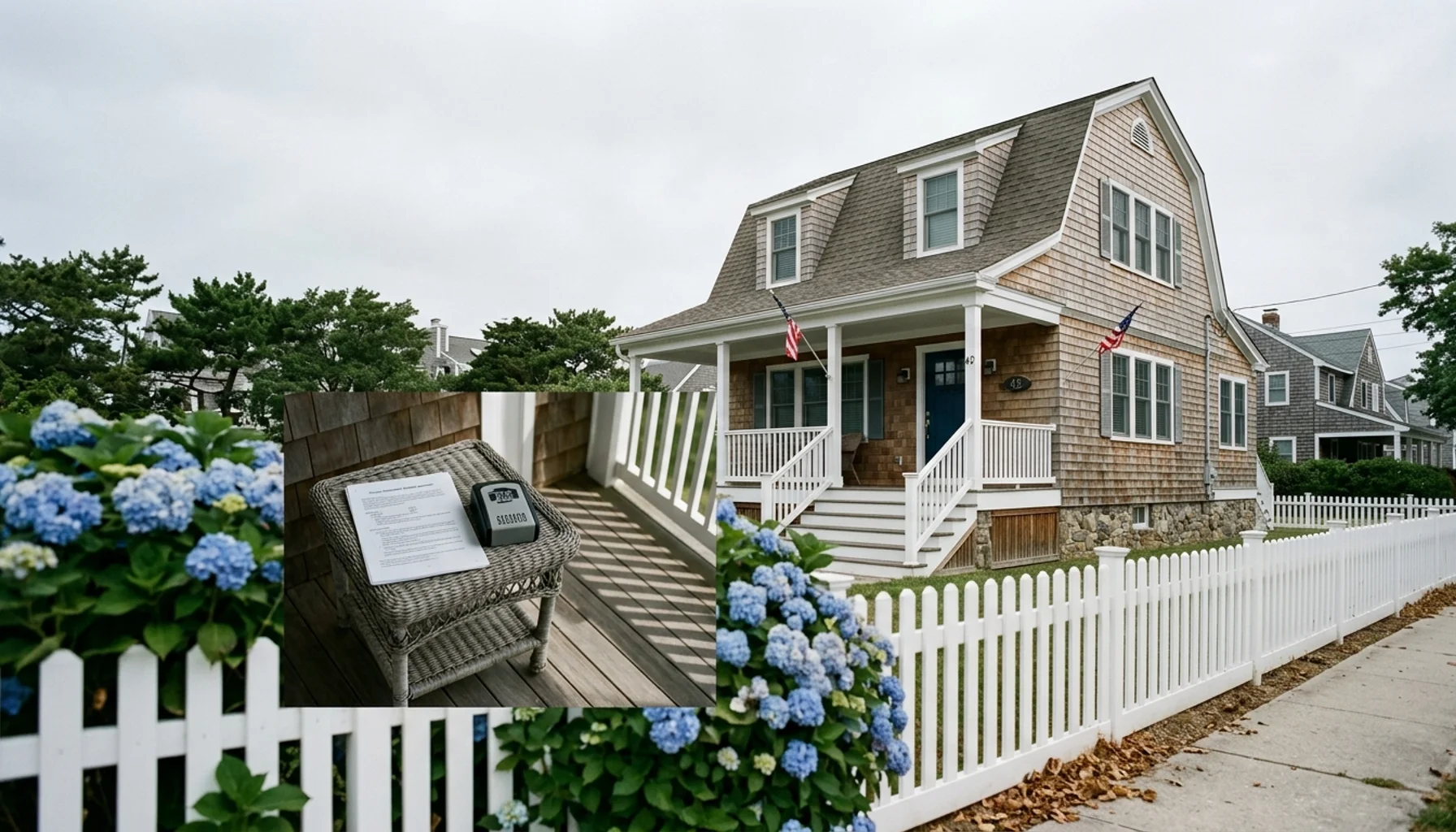
If you’re weighing whether to buy, or you already own a property and want to know what professional management could do to your actual cash-on-cash return, Endless Stays manages hand-kept vacation homes across the Jersey Shore, Shenandoah Valley, Smoky Mountains, and Florida’s Gulf Coast, with results like sustained Superhost status for 25+ consecutive quarters and properties ranking in the top 3rd to 5th spot in competitive Monmouth County beach towns. Reach out through endlessstaysco.com to talk through what dynamic pricing and full-service management could mean for your numbers.