
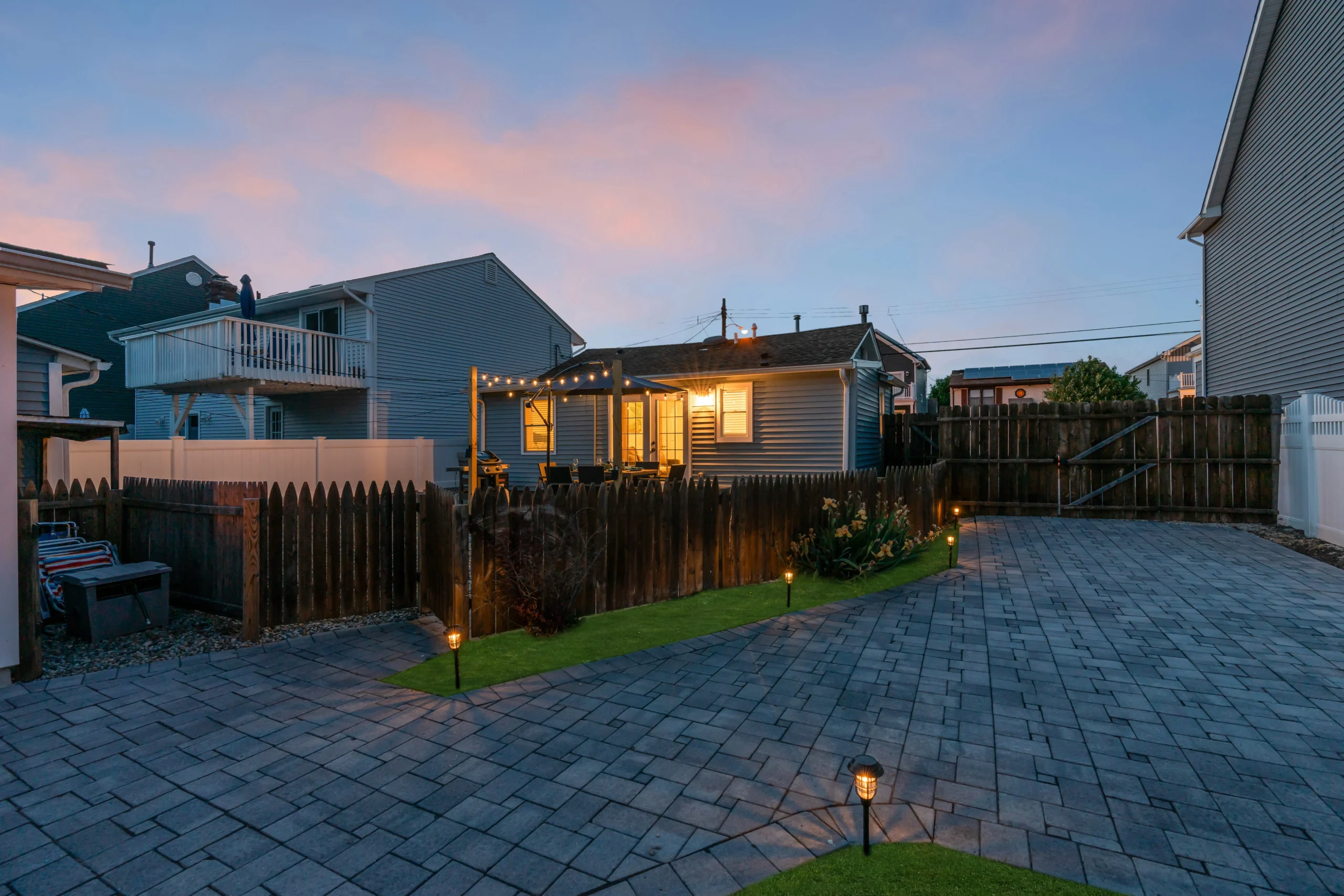
Booking direct with a New Jersey vacation rental owner can save you money because you often avoid Airbnb’s guest service fee (commonly around 14% of the subtotal) and, in many cases, the state’s 11.625% combined sales tax and occupancy fee that applies to marketplace bookings. Whether direct booking actually saves you money depends on who owns the property and how the payment is processed.
Key Takeaways
- New Jersey exempted qualifying owner-direct rentals from the 6.625% state sales tax and 5% State Occupancy Fee (11.625% combined) starting August 9, 2019, according to the NJ Division of Taxation transient accommodations FAQ.
- Airbnb guests typically pay a service fee of around 14% of the booking subtotal, while hosts pay roughly 3%, according to Mashvisor data from 2026.
- Owners who list three or more units in New Jersey are treated as professionally managed and generally cannot claim the direct-booking tax exemption.
- Asbury Park’s combined transient accommodation tax runs 14.625% (state sales tax, State Occupancy Fee, and a 3% municipal occupancy tax), which applies whether you book through a marketplace or the owner, depending on how the unit is managed.
- Guests who book directly return to book again about 28.3% of the time, compared with 8.9% for Airbnb bookers, according to hostAI’s 2026 guest retention research.
- Endless Stays manages hand-kept properties across Ocean Grove, Belmar, and Bradley Beach and books both directly and through major platforms, so it sees fee structures from both sides of the transaction.
If you’ve ever priced a weekend in Belmar on Airbnb, then found the same house listed on the owner’s own website for less, you already know something is off between the sticker price and the checkout total. The gap usually isn’t the nightly rate. It’s a combination of platform service fees, New Jersey’s transient accommodation tax rules, and, in some towns, an added municipal tax that shows up depending on how the property is managed.
Endless Stays operates hand-kept vacation homes across the Jersey Shore, including Ocean Grove, Belmar, and Bradley Beach, and books guests both directly and through Airbnb and VRBO. That dual vantage point means we see exactly where each dollar goes on both sides of a reservation, and in 2026, with New Jersey tourism spending projected to climb toward $53.6 billion statewide, understanding those fee mechanics matters more than ever for both travelers and owners.
This guide breaks down what Airbnb and direct booking actually charge, how New Jersey’s tax rules treat each type of booking differently, and what you genuinely give up or gain by skipping the marketplace. We’ll also cover the parts most comparison articles skip: refund protections, dispute resolution, and why “direct” doesn’t automatically mean “tax-free” for every property.
Should I Book Through Airbnb or Direct?
Booking direct usually costs less on a like-for-like property because you avoid Airbnb’s guest service fee, but it also means you lose Airbnb’s built-in payment protection, review system, and dispute process. The right choice depends on how much you trust the specific owner and whether the property is professionally managed.
For a straightforward math example: a $2,100 stay on a marketplace can carry an estimated Airbnb platform fee of roughly $294 at a 14% rate, according to figures published by DirectBookingHost, versus $0 in marketplace service fees when paid straight to an owner. That’s before New Jersey’s transient accommodation tax is even factored in, since state tax treatment depends on whether the booking runs through a transient space marketplace or is arranged and paid for directly.
Direct booking works best when the owner or manager has a track record you can verify, such as consistent reviews across platforms, a real phone number, and a professional-looking booking page. It works less well when you’re dealing with a stranger’s Craigslist post and no paper trail. Properties managed by an established local operator, rather than an anonymous individual owner, tend to close that trust gap.
Where Are the Best Places to Book Airbnbs in New Jersey?
The strongest New Jersey markets for short-term rentals in 2026 cluster around the shore towns and NYC-adjacent commuter cities, with occupancy and demand patterns that differ sharply by season and location. Cape May County alone recorded over 12 million visitors in the most recent tourism research, split between day trips and overnight stays.
Jersey City posts some of the state’s steadiest short-term rental performance, with a reported 74% occupancy and around $179 average nightly rate for the twelve months ending January 2026, driven by year-round NYC-adjacent business and medical travel rather than beach seasonality. Statewide, Airbtics reported a 2026 average occupancy of 57.2% and average daily rate of $239 across New Jersey short-term rentals.
Shore towns tell a different story. Cape May’s seasonal swing is dramatic: 71% occupancy in summer against just 10% in winter, based on 2026 seasonal benchmarks. Ocean Grove, Belmar, and Bradley Beach follow similar patterns, with summer weekends booking out months ahead and shoulder-season rates dropping sharply. Ocean Grove properties like The Embury Hideaway sit a 12-minute walk from the beach and roughly five minutes from Asbury Park’s boardwalk and nightlife, which helps smooth out some of that seasonal dip by pulling weekend visitors year-round, not just summer beachgoers.

Why Are People No Longer Booking Everything Through Airbnb?
Travelers are shifting some bookings away from Airbnb because of rising visible fees, inconsistent fee presentation, and a growing awareness that owners often keep more of the payment when guests book directly. This isn’t an exodus from the platform, it’s a rebalancing where price-sensitive and repeat travelers increasingly check the owner’s own site first.
Specifically, Airbnb’s fee presentation has changed in ways that can bake a platform markup, sometimes cited around 18.5%, into the displayed nightly price rather than showing it as a separate line at checkout. That makes side-by-side comparison harder for a guest scanning multiple listings quickly. Additionally, VRBO’s guest service fee has been reported anywhere from 6% to 18% depending on the source and booking, which is enough inconsistency that treating any single percentage as fixed would be misleading.
For repeat travelers, the incentive to book direct compounds over time. hostAI’s 2026 research found that guests who book directly return through the same channel about 28.3% of the time, versus 8.9% for Airbnb-sourced guests. Once a traveler has a good stay with an owner or management company, going straight to that source next time is often just faster and cheaper.
What Is the 80/20 Rule for Airbnb?
There is no verified, officially documented “80/20 rule” from Airbnb or a recognized industry body that applies to guest fees, host payouts, or booking splits in New Jersey. If you’ve seen this phrase used online, treat it as an informal shorthand rather than an established platform policy, and don’t rely on it for financial planning.
What is verifiable is Airbnb’s actual fee structure: hosts using the standard split-fee model typically pay around 3% of the booking subtotal, while guests pay roughly 14%, based on 2026 Mashvisor data. Software-connected professional hosts can face a different structure entirely, sometimes described as a host-only fee near 15.5%, which shifts the whole platform fee onto the owner instead of splitting it with the guest.
Rather than chasing a rule that doesn’t exist in any official source, focus on what does: your specific listing’s fee structure (visible in the host dashboard), your municipality’s occupancy tax rules, and whether your unit qualifies as professionally managed under New Jersey’s tax code. Those three factors determine your real payout far more reliably than any informal “rule” circulating on forums.
How Do New Jersey Taxes Change Depending on Booking Method?
New Jersey’s transient accommodation tax applies differently based on how a rental is booked and paid for, not simply on whether it’s advertised online. Since August 9, 2019, a rental obtained directly from the owner has generally been exempt from the state’s 6.625% sales tax and 5% State Occupancy Fee, a combined 11.625%, unless the unit counts as professionally managed, according to the NJ Division of Taxation.
The state defines a taxable “transient space marketplace” booking partly by payment flow: if the rental agreement is made through the marketplace and the payment runs through a mechanism the marketplace provides, it’s taxable, regardless of who eventually receives the money. An owner advertising online through a simple listing site, where payment goes straight to the owner and the site never touches the transaction, can remain exempt. The moment Airbnb, VRBO, or a similar platform arranges the booking and processes payment, the exemption disappears.
There’s a critical carve-out that trips up a lot of owners: anyone offering three or more units in New Jersey is treated as operating a professionally managed unit. That means owners with a small portfolio generally can’t claim the direct-booking exemption even if a guest pays them directly, unless the rental still runs through a qualifying transient space marketplace or licensed real estate broker.
Municipal Occupancy Tax Adds Another Layer
Beyond state tax, New Jersey’s Department of Community Affairs allows municipalities to add a local occupancy tax of up to 3% on qualifying short-term rental transactions, per the New Jersey Department of Community Affairs local finance notice, with statutory exceptions carved out for certain cities including Newark, Elizabeth, Jersey City, Paterson, Atlantic City, Wildwood, Wildwood Crest, and North Wildwood. Asbury Park is a good example of how this stacks: its combined rate runs 14.625%, made up of the 6.625% state sales tax, 5% State Occupancy Fee, and a 3% Asbury Park short-term-rental ordinance municipal tax that’s applied since February 1, 2021.
Asbury Park also requires a short-term-rental permit and Certificate of Inspection before a listing can even be advertised, with a first-year permit cost around $500 and a $100 annual renewal, both non-refundable. Applicants must show the rental is their principal residence with documentation like a driver’s license, federal tax form, and a bank statement. Belmar, Ocean Grove, and Bradley Beach each carry their own local rules, so if you’re an owner in one of these towns, checking your municipal clerk’s office directly beats relying on a blog post for current permit fees.

What’s the Real Dollar Difference Between Booking Direct and Booking Through Airbnb?
The real dollar difference between booking direct and booking through a platform comes from two separate charges stacking together: the platform’s guest service fee and, in some cases, New Jersey’s transient accommodation tax. Depending on the property and municipality, these can add anywhere from roughly 14% to nearly 29% onto a direct-booked owner’s price.
Here’s a worked comparison using a hypothetical $1,500 nightly-rate stay in a shore town with a 3% municipal occupancy tax layered on top of the state rate, similar to Asbury Park’s structure:
| Booking Method | Base Rate | Platform/Guest Fee | NJ State Tax + Occupancy Fee | Municipal Tax (if applicable) | Estimated Guest Total |
|---|---|---|---|---|---|
| Airbnb (marketplace) | $1,500 | ~14% (~$210) | 11.625% (~$174) | Up to 3% (~$45) | ~$1,929 |
| VRBO (marketplace) | $1,500 | Varies, commonly cited 6%-18% (~$90-$270) | 11.625% (~$174) | Up to 3% (~$45) | ~$1,809-$1,989 |
| Direct booking, qualifying owner (fewer than 3 units) | $1,500 | $0 marketplace fee | Exempt if truly direct and non-professionally-managed | Depends on municipal ordinance; may still apply | ~$1,500-$1,545 |
| Direct booking, professionally managed (3+ units) | $1,500 | $0 marketplace fee | 11.625% still applies (professionally managed exception) | Up to 3% (~$45) | ~$1,719 |
Notice that the professionally managed row still owes state tax even when booked directly. That distinction gets lost in a lot of “book direct and skip the tax” marketing, and it’s the single most common misconception guests bring to this comparison. If a company manages your rental alongside several other units, as most legitimate management companies do, direct booking eliminates the platform fee but doesn’t automatically eliminate New Jersey’s tax obligation.
What Do Guests Give Up by Booking Direct Instead of Through Airbnb?
Booking direct means trading Airbnb’s built-in payment protection, guest reviews, and dispute mediation for a lower total price and a more direct relationship with the property owner or manager. For a stranger’s private listing with no track record, that trade can be risky. For an established local operator, it’s usually a low-risk way to save money.
Specifically, Airbnb and VRBO both hold guest payment in escrow until check-in and offer a formal process to dispute a listing that doesn’t match its description. Direct bookings typically rely on the owner’s own cancellation policy and payment processor, with no third-party mediator if something goes wrong. There’s also no aggregated review history to check unless the owner links out to their Airbnb or Google reviews separately.
That said, most reputable direct-booking sites, including individual owner sites and platforms like Houfy, still process payment through secure, PCI-compliant processors, and legitimate management companies typically carry their own cancellation and refund policies clearly stated at checkout. The risk isn’t inherent to direct booking, it’s inherent to booking with an unverified, one-off owner with no digital footprint. Checking for consistent reviews across multiple channels, a real business address, and clear house rules before paying solves most of that risk.
How Should Owners Decide Between Airbnb, VRBO, and Direct Booking?
Owners get the strongest results by using platforms like Airbnb and VRBO for visibility and new guest discovery while pushing repeat guests toward a direct booking channel over time. Relying on only one channel usually means either paying more in fees than necessary or missing the exposure that gets new guests in the door in the first place.
First, understand that platform fees aren’t the enemy, they’re the cost of discovery. A first-time guest finding a Belmar rental has no reason to trust an unknown owner’s website over Airbnb’s review system and payment protection. That trust has to be earned before a guest will book direct. Second, once a guest has stayed once and had a good experience, capturing their contact information and offering a direct-booking option on the next stay recovers margin that would otherwise go to platform fees.
This is exactly the strategy Endless Stays uses across its Jersey Shore portfolio: properties list on Airbnb and VRBO for discovery, while repeat guests get pointed toward direct booking, which is one reason the company’s listings have generated thousands in direct bookings independent of marketplace traffic. One owner who launched a Jersey Shore property with Endless Stays generated thousands of dollars in direct bookings within the first 90 days, reached 90% occupancy six months out through a combination of direct bookings and multichannel marketing, and earned a top 5% guest favorite badge in the area. That’s the multichannel approach at work, not a single-platform bet.
Owners weighing this decision on their own should read our breakdown on whether a vacation rental is worth it before committing to a single-channel strategy, since the cash-on-cash math changes significantly depending on how much of your booking volume comes direct versus through a marketplace.
What Should Owners Know About Compliance Before Booking Direct?
Compliance for direct-booking owners in New Jersey means confirming unit count, registering with the state if required, and checking municipal permit rules before advertising anywhere, including on your own website. Skipping this step is the most common and most expensive mistake we see among self-managing owners.
An owner offering three or more units in New Jersey must register to collect applicable taxes unless every rental runs through a qualifying transient space marketplace or a licensed real estate broker, per the state’s transient accommodations guidance. That means a small landlord with two shore rentals has different tax obligations than someone managing five. Additionally, municipalities can require their own permits, inspections, and stay-length limits independent of state rules, as seen in Asbury Park’s principal-residence requirement and 180-day annual rental cap.
For owners managing rentals in property management in New Jersey more broadly, or specifically evaluating Airbnb management in New Jersey, this is the layer that trips up first-time hosts the most. Rules differ by town, and a permit that works in Bradley Beach won’t necessarily transfer to Belmar or Ocean Grove. Checking with your local municipal clerk before listing anywhere, direct or marketplace, is worth the hour it takes.
Practical Guidance: How Should You Actually Choose?
Choosing between booking direct and booking through Airbnb comes down to weighing verified trust against total price. Use this quick framework:
- Check for a track record. Does the owner or manager have reviews on Airbnb, Google, or VRBO you can cross-reference against their direct-booking site? If yes, direct booking is usually safe.
- Compare the total, not the nightly rate. Add the platform fee and any applicable New Jersey tax to the Airbnb price, then compare it to the direct-booking total including tax if the unit is professionally managed.
- Ask how payment is processed. A direct-booking site using a secure, named payment processor is a good sign. Wire transfers or personal Venmo requests from a stranger are a red flag.
- Read the cancellation policy before you pay. Marketplace bookings have standardized cancellation tiers. Direct bookings vary by owner, so read the fine print.
- For owners, don’t abandon platforms entirely. New guest discovery still happens mostly through Airbnb and VRBO. Use direct booking to retain repeat guests, not to replace your entire marketing funnel.
A common mistake we see from both guests and owners: assuming “direct” always means “cheaper” or “tax-free.” As the table above shows, a professionally managed direct booking still owes New Jersey’s state tax, and a poorly vetted direct booking with an unverified owner can end up costing more in risk than it saves in fees.
Frequently Asked Questions
Are there vacation rentals available in Asbury Park, New Jersey?
Yes, Asbury Park and neighboring Ocean Grove have a range of short-term rentals available both on major platforms and through direct booking. Ocean Grove properties like The Embury Hideaway and The Embury Retreat sit roughly five minutes from Asbury Park’s boardwalk and downtown, making either town a workable home base for the same stretch of coastline.
Is it possible to find Airbnb options near the beach in Asbury Park, New Jersey?
Yes, several beachfront-adjacent listings exist in and around Asbury Park on Airbnb, VRBO, and through direct-booking owner sites. Ocean Grove, just south of Asbury Park, has walkable beach options roughly a 12-minute walk from properties like The Embury Hideaway, with 4 included beach badges as a common local amenity.
What are the best places to stay at the Jersey Shore, New Jersey?
The best Jersey Shore towns to stay depend on your priorities: Belmar and Bradley Beach suit walkable boardwalk access and nightlife, Ocean Grove offers quieter Victorian charm with easy access to Asbury Park’s energy, and Cape May draws heavier summer crowds with the steepest seasonal swing in occupancy. Check our guide to where to stay in New Jersey for a town-by-town breakdown.
Should I book through Airbnb or direct for a New Jersey rental?
Book direct when the owner or manager has a verifiable track record and transparent pricing, since you’ll typically avoid the platform’s guest service fee. Book through Airbnb or VRBO when you want built-in payment protection, a formal review system, or you’re staying with a first-time or unverified host.
Why are some travelers moving away from booking everything through Airbnb?
Rising and less transparent fee presentation is the main driver, along with a growing awareness that direct booking often means a lower total price for the same property. This is a shift toward using multiple channels, not an abandonment of the platform, since Airbnb still offers discovery and protection that direct booking can’t replicate for a first-time guest.
Does booking direct always mean avoiding New Jersey’s rental tax?
No. New Jersey’s direct-booking tax exemption only applies to owners who aren’t professionally managed, generally meaning fewer than three units, and where payment is made directly to the owner without a marketplace processing it. Owners managing three or more units, or bookings processed through platforms like Airbnb or VRBO, remain subject to the 11.625% combined state tax and occupancy fee regardless of how the booking was arranged.
What are the best direct-booking discounts available for beachfront stays this summer?
Discounts vary by property and owner, but the biggest built-in savings from booking direct come from avoiding the platform’s guest service fee, commonly cited around 14% on Airbnb, rather than a specific promotional discount. Ask the owner or management company directly about repeat-guest rates, since many, including Endless Stays, offer direct-booking incentives that aren’t listed on marketplace pages.
How does dynamic pricing affect what guests pay whether booking direct or through Airbnb?
Dynamic pricing adjusts a property’s nightly rate based on demand, season, and local events, and it applies whether the guest books direct or through a marketplace since it’s set at the property level, not the booking channel. Research across 541 Airbnb listings found dynamic pricing associated with a 36.3% average increase in gross revenue per unit, which typically means rates fluctuate more actively around high-demand shore weekends than a flat annual rate would.
Conclusion: What’s the Bottom Line on Book Direct vs Airbnb in New Jersey?
Booking direct in New Jersey usually saves you the platform’s guest service fee, roughly 14% on Airbnb, but it only skips state tax if the owner qualifies as non-professionally-managed and payment bypasses any marketplace processor entirely. For most guests comparing a Belmar or Ocean Grove rental, the safest approach is adding up the full total, fee plus applicable tax, on both sides before deciding, rather than assuming direct is automatically cheaper or tax-free.
As New Jersey tourism heads toward a projected 126.7 million visitors in 2026, that fee transparency matters more each season, especially with events like the 2026 FIFA World Cup expected to draw travel activity near the state. Whether you book direct or through Airbnb, understanding who collects what and why keeps you from overpaying or under-protecting yourself. Already hosting at the Jersey Shore? Our Jersey Shore Airbnb management page covers what we handle day to day.
If you’re planning a Jersey Shore stay, Endless Stays manages hand-kept properties across Ocean Grove, Belmar, and Bradley Beach, booking both directly and through major platforms so you can compare the real total either way. With a track record that includes top 3rd to 5th ranked properties in Monmouth County and Superhost status held for 25+ consecutive quarters, Endless Stays is built to be the kind of verified, trustworthy host that makes direct booking the easy choice.